


5 Medical Jobs That Can Never Be Automated
Are you thinking about joining the medicine industry but are unsure whether technology would replace human workers? Here are a few jobs that artificial intelligence cannot replace
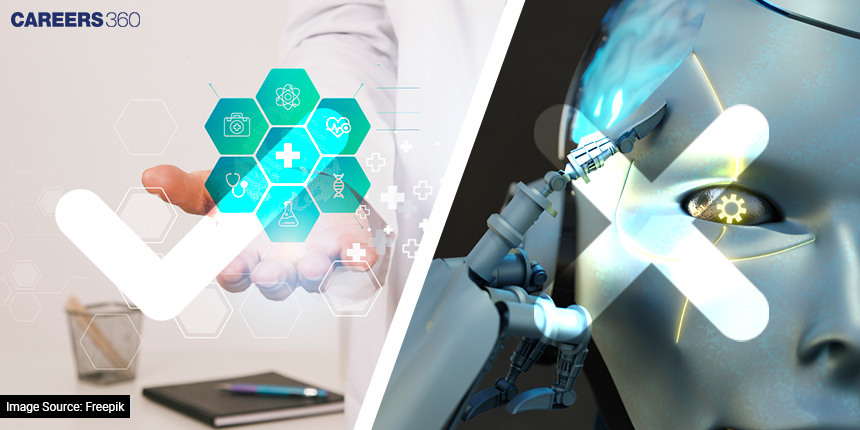
People and their lifestyles differ as much as people themselves. It doesn’t matter how much automation rises, each of the tasks needs personalised medical attention. Medical practice is not an orderly process, so it requires a creative approach towards problems and situations. Race, genetics, and gender are a few of the elements that could influence health predictions by automation; if these aspects are not taken into consideration, then it may overestimate or underestimate patient risk factors. Professions like nurses, physical therapists, gynaecologists, dermatologists and dentists can help us comprehend the above statements and also explain why the involvement of a human expert will continue to be.
Nurse Practitioners
Nurse practitioners come under the primary healthcare sector where they are the source of primary care providers. In contrast to doctors, nurses spend more time with patients, give more comprehensive medical care, and deliver more information and offer counselling, all of which increase the patient’s will to fight the disease and also adds to their level of satisfaction with the treatment. Additionally, they manage records, identify physical problems, provide self-care guidance, and operate better in communication. They are mindful of how others feel and recognise when they require further psychological support. Nurses show a lot of dedication towards learning how to perform tasks with compassion, all of which a robot or any AI specialised machine cannot achieve.
Physical Therapists
Physical therapist is the one who acquired training in diagnosing and treating patients with diseases or injuries that restrict their ability to move freely. The ability of thinking gives physical therapists an advantage over robot competition. Even after getting an exact method or model, modifications will still be necessary during the rehabilitation process. In reality, there is an urge to create clinical therapy models, empowering physical therapists and to utilise their professional judgement to choose the most appropriate model for a patient. Currently, there are protocols that exist for curing injuries, but they aren't designed to provide a "one-size-fits-all" resolution. Also, everybody reacts, appears, and experiences differently when they are injured.
Physical therapists invest plenty of time in the lab and on practical training studying varied massage therapies for treating different injuries, such as scar massage, inverse friction and soft tissue. Even after that changes need to be done according to the patient’s feedback and reactions. Plus, compared to a robot hand, a human hand certainly feels better on the body.
Gynaecologists
Apart from assisting and monitoring childbirth, gynaecologists also identify and treat health issues pertaining to female anatomy. Although there are instruments and AI generated machines these days that can help in healthy diagnosis as well as observation, yet all the data that is collected from machines still needs to be well identified, analysed, and addressed by gynaecologists to their patients who are humans and hence each case will differ from the other. Hence, it will be unfair to totally depend upon automation as it can put an individual at risk.
Dermatologists
A dermatologist is a medical professional who focuses on the diagnosis and treatment of conditions affecting the skin, hair, nails, and mucous membranes. Many skin disorders may be treated with medications and noninvasive procedures, while some need for surgical methods. These actions needed to be performed under the supervision and guidance of specialists. Despite the fact, AI has a wide range of uses in dermatology, there is a major obstacle hindering the implementation of AI – privacy concerns and the absence of image standardisation. Dermatologists play an essential role when it comes to the standardisation of data collecting, assembling of data for machine learning, the clinical validation of AI solutions, and eventually the adoption of this radical change that is transforming their practice.
Dentists
A dentist can identify and manage health issues relating to the oral cavity, teeth, and gums, monitoring the development of the jawbone, teeth and sometimes performing dental operations as well. Dental AI is too new, unsubstantiated, and expensive for consumers to adopt. Educational and informative apps can help to instil self-awareness and allow patients to have better control over their oral health status but there is no substitute for a human dentist using a sense of timing and sensitivity to better understand the patient's needs and customise a treatment plan accordingly. Moreover, there are treatments and services which still require manual dexterity.
However, the goal is to create an environment to close the gap between experts and the machine in live clinical settings and not the contradiction of human specialists and machines. In order to maintain trustworthiness, healthcare must continue to function according to ethically prescribed standards and prioritise the well-being of the patient.
