
Search Colleges, Exams, Schools & more


Login
Gram Staining MCQ - Practice Questions with Answers
Edited By admin | Updated on Sep 18, 2023 18:34 AM | #NEET
Quick Facts
-

9 Questions around this concept.
Solve by difficulty
 EASY
EASYThe Gram stain differentiates between bacteria on the basis of
Concepts Covered - 1
Gram Staining
- The Gram staining is a microbiological differential staining technique.
- It was developed by Dr Christian Gram in 1884.
- It categorizes bacteria according to the chemical composition of their cell wall.
Principle of Gram staining:
- The structure of a bacterium's cell wall determines whether it is gram positive or negative.
- When stained with a primary stain and fixed by a mordant, some bacteria are able to retain the primary stain by resisting decolourization.
- While others get decolourized by a decolorizing agent.
- Those bacteria which retain the primary stain are called Gram-positive and those bacteria which gets decolourized and then get counterstained are called Gram-negative.
Staining Procedure:
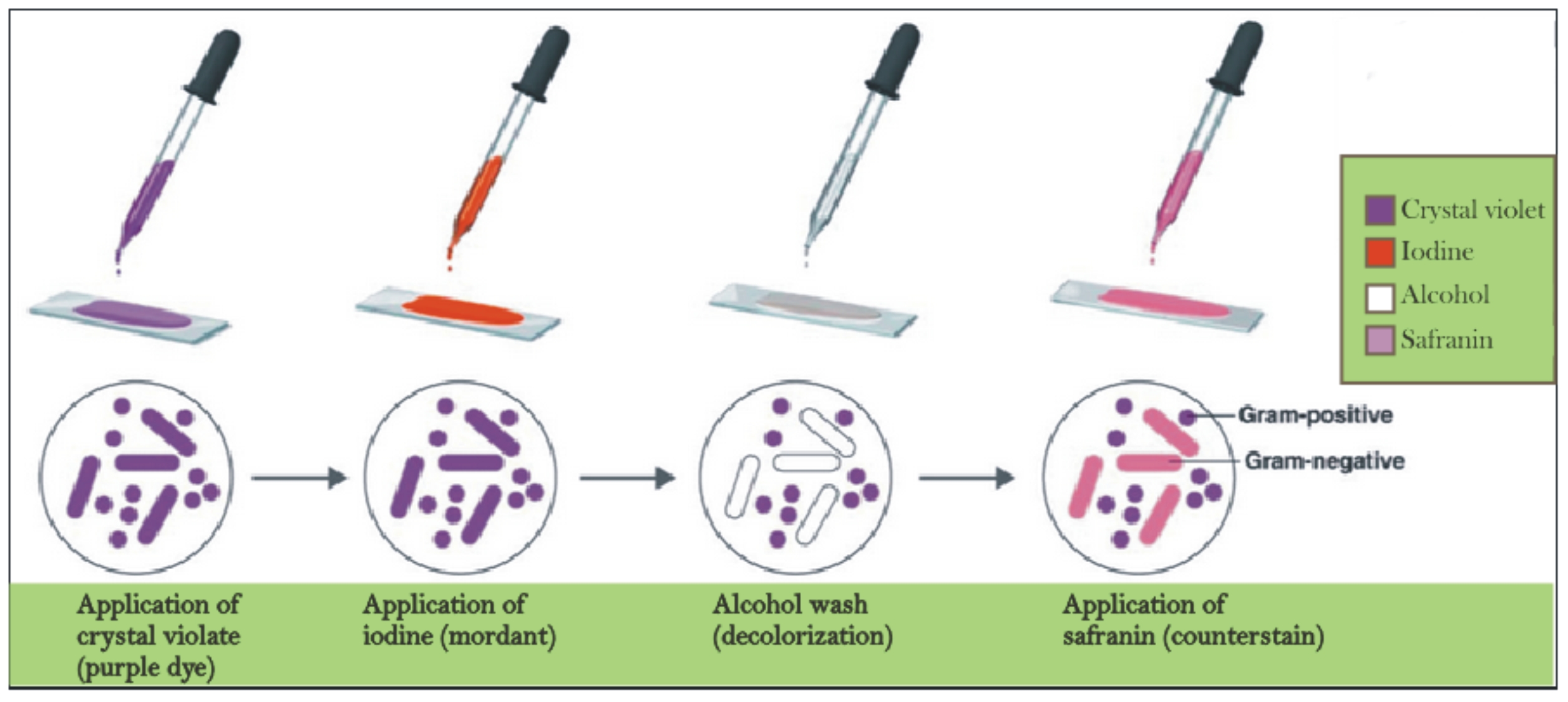
Types of bacteria based on Gram staining:
Gram-positive bacteria
- These bacteria retain the blue or purple colour even after washing with alcohol.
- The cell wall of Gram-positive bacteria is single-layered.
- The thickness of the cell is 20-80nm.
- Lipid content of the wall is very low.
- Mucopeptide is high i.e. 70-80%.
- Mesosomes are prominent.
- These bacteria are susceptible to antibiotics.
- Cell wall contains teichoic acid.
Gram-negative bacteria
- Bacteria which do not retain any colour and become colourless after Gram staining are called Gram-negative bacteria.
- The wall is two layered and it is 8-12 nm thick.
- The lipid content of the cell wall is on a higher side. It is at 20-30 %.
- The content of mucopeptide is low i.e. 10-20%.
- Mesosomes are less prominent.
- These bacteria are resistant to antibiotics.
- Teichoic acids are absent in Gram-negative bacteria.
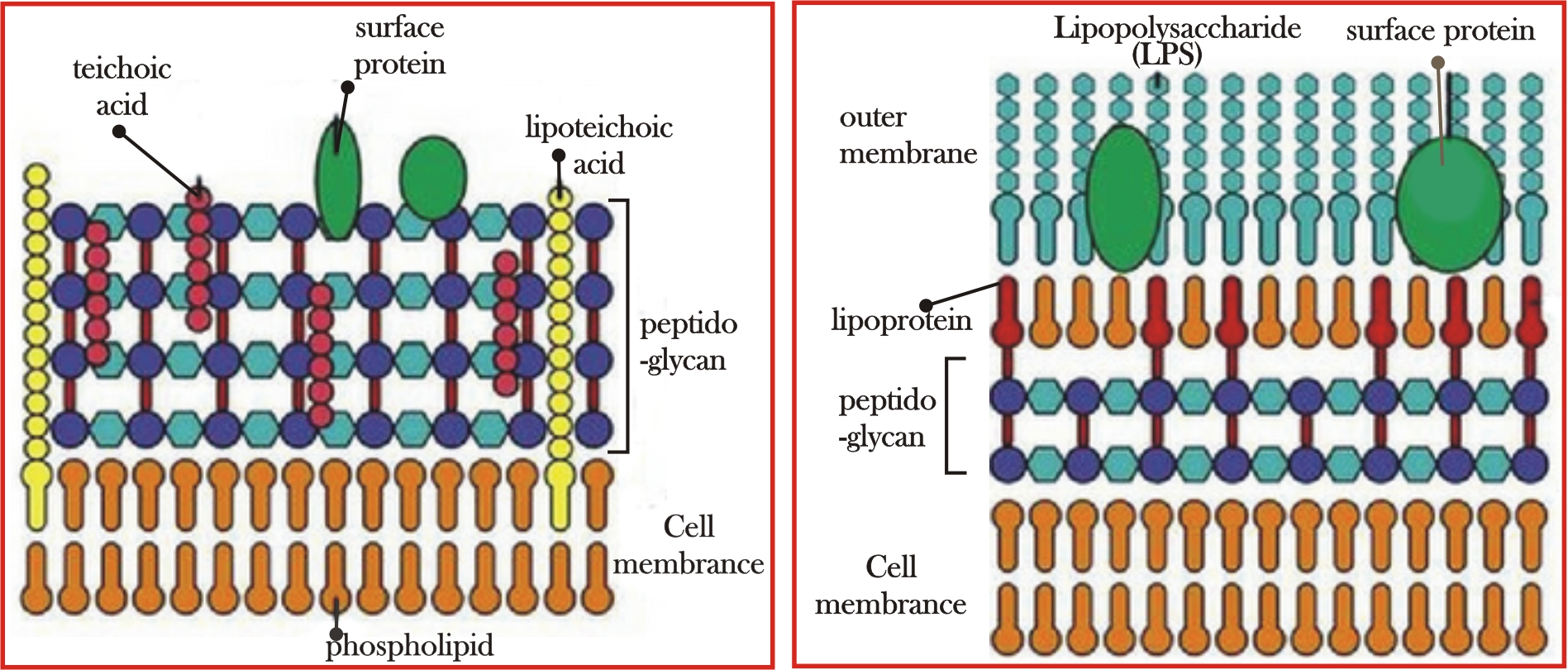
Study it with Videos
"Stay in the loop. Receive exam news, study resources, and expert advice!"