


Epidermal Tissue System MCQ - Practice Questions with Answers
Quick Facts
-

19 Questions around this concept.
Solve by difficulty
 MEDIUM
The protective cover in the primary plant body is formed of
Cuticle is absent in
Match the following and choose the correct option from below
|
Column A |
Column B |
|
A. Meristem |
(i) Photosynthesis, storage |
|
B. Parenchyma |
(ii) Mechanical support |
|
C. Collenchyma |
(iii) Actively dividing cells |
|
D. Sclerenchyma |
(iv) Stomata |
|
E. Epidermal tissue |
(v) Sclereids |
|
|
|
In which of the following pairs of parts of a flowering plant is the epidermis absent?
Which of the following statements is incorrect for the epidermis?
Specialised epidermal cells surrounding the guard cells are called:
Lithocysts are not found in
The cells which help in rolling of the leaves to prevent the transpiration during water stress are
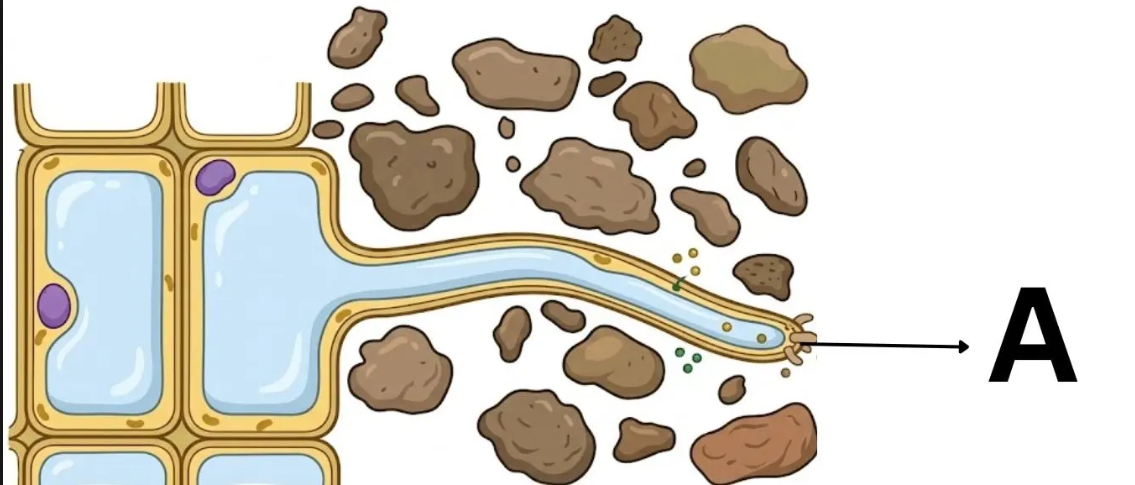
Identify and label the part of the plant.
Which among the following statements is incorrect about monocotyledonous tissue systems
Concepts Covered - 2
Epidermal Tissue System
- It is the outermost tissue system of the plant body involved in protection.
- It originates from the protoderm of apical meristem.
- It consists of the tissues discussed below:
Epidermis
- It is the outermost continuous layer of parenchymatous cells in the primary plant body.
- If the epidermis is a single layer, it is called uniseriate.
- If the epidermis is multi layered, it is called multiseriate.
- Multiseriate epidermis is seen in xerophytic plants, like, Ficus, Nerium, Peperomia, Cactus.
- The cells of epidermis lack intercellular spaces.
- In aerial parts of the plant, the outer cell wall of the epidermal cells is covered with a waxy substance called cutin.
- The layer of cutin is called cuticle.
- Cuticle never occurs in the epidermis of roots. The epidermis of root is called epiblema.
- Cuticle is also absent in submerged hydrophytes.
- Epidermis is the protective layer that protects the underlying tissues against mechanical injury, light intensity, thermal changes, microbial attacks, general abrasion, etc.
- Epidermis stores mucilage in succulent plants.
- In some plants, it performs photosynthesis.
Epidermal Tissue System - Special Epidermal Structures
Lithocysts:
- Lithocysts are the epidermal cells that contain the mass of calcium carbonate called cystolith.
- These are seen in the members of Acanthaceae, Urticaceae, Cannabaceae, and in the Indian Rubber Plant (Ficus elastica) of the family Moraceae.

Myrosin Cells:
- These are the idioblasts that store the myrosinase enzyme in the form of granules.
- The myrosinase enzyme hydrolyses the glucosinolates.
- This acts as a deterrent to the herbivores in Brassicales.
Bulliform Cells:
- These are enlarged bubble-shaped epidermal cells.
- These are present on the adaxial surface of leaves in many monocots. (adaxial surface - upper surface; abaxial surface - lower surface).
- These are seen near the midrib.
- These help in rolling the leaves to prevent transpiration during water stress.
- These are also called motor cells.
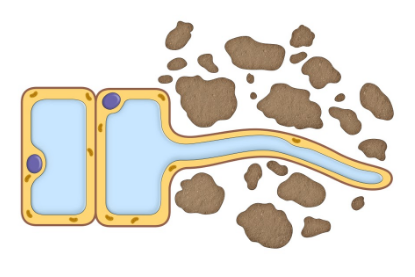
Root hairs:
- These are the unicellular extension of the epidermal cells of roots.
- These increase the surface area of absorption.
- They collect water and mineral nutrients present in the soil and pass them on to the conducting tissues of the root.
Trichomes:
- These are the epidermal outgrowth seen in the shoot system.
- Unlike root hairs, these can be multicellular.
- These can be stellate hair, glandular hair, stinging hair, etc.
- The trichomes serve for checking excess loss of water and for protection.
Stomata:
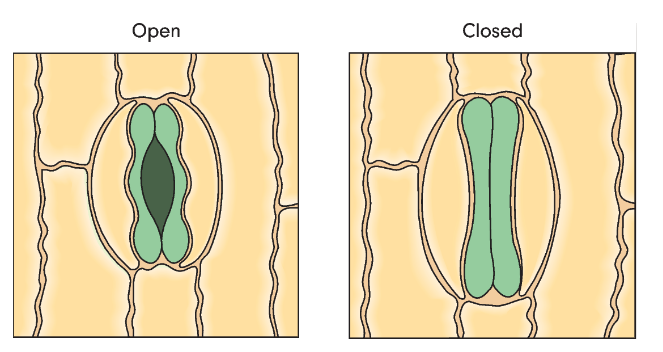
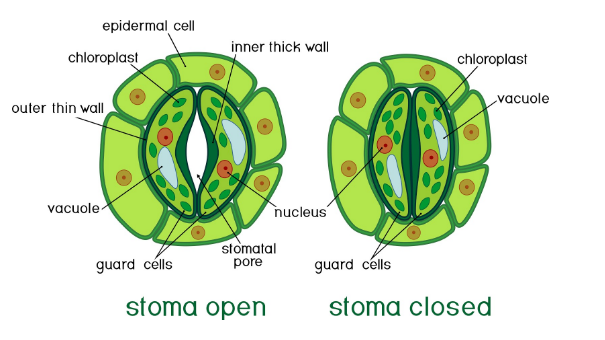
- These are the tiny openings or pores in the epidermal system of plants, especially leaves.
- Stomata can also occur in the stem.
- The stomata are surrounded by specialized epidermal cells called guard cells that regulate the opening and closing of stomata.
- Guard cells are generally bean-shaped in dicots and dumbbell-shaped in monocots.
- Stomata regulate the gaseous exchange and transpiration.
- Some surrounding epidermal cells become specialized to form the subsidiary cells.
- The stomatal aperture, guard cells, and subsidiary cells are called the stomatal aperture.
Study it with Videos
"Stay in the loop. Receive exam news, study resources, and expert advice!"