KCC Institute of Legal and Higher Education, Greater Noida
Law Admissions 2026 Open | Avail Merit-Based Scholarships


Cell division is an amazing process that is fundamental to the ongoing evolution of life. From the development of a single-cell zygote to the complex growth and repair mechanisms in multicellular organisms, cell division is the engine driving these phenomena. Understanding the significance of cell division is key to unravelling the mysteries of growth and repair in living organisms.
This Story also Contains
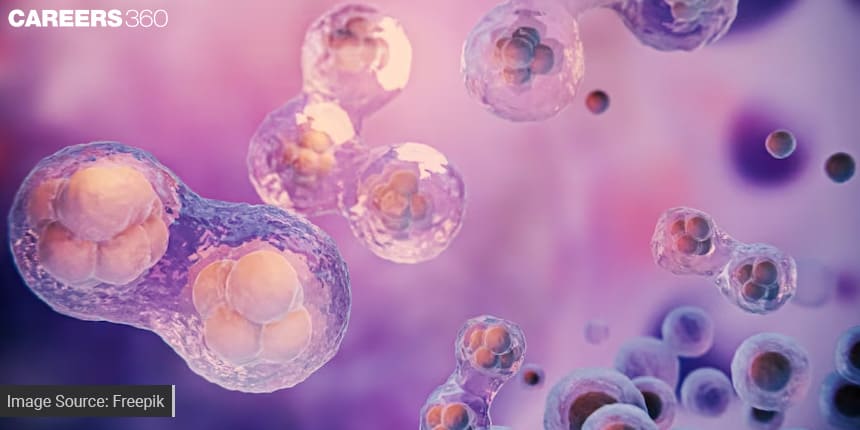
Cell division occurs through a precisely regulated sequence of events known as the cell cycle. This cycle consists of interphase, where the cell prepares for division, and mitosis or meiosis, where the actual division takes place.
G1 Phase: The cell grows and prepares for DNA synthesis.
S Phase: DNA synthesis occurs, resulting in the replication of genetic material.
G2 Phase: The cell continues to grow and prepares for mitosis.
Prophase: Chromosomes condense, and the nuclear envelope breaks down.
Metaphase: Chromosomes align at the cell's equator.
Anaphase: Chromatids separate and move to opposite poles.
Telophase: Chromosomes decondense, and nuclear envelopes reform.
The cell divides into two daughter cells, each with a complete set of chromosomes.
Zygote Formation: The fusion of sperm and egg results in a single-cell zygote that undergoes rapid cell divisions to form a multicellular embryo.
Cell Differentiation: Cell division is accompanied by differentiation, where cells become specialised for specific functions.
Tissue Formation: Cells continuously divide and differentiate, leading to the development of tissues and organs.
Somatic Cell Growth: Throughout an organism's life, cell division contributes to the growth of somatic cells, ensuring overall development.
Controlled Division: Growth hormones regulate the rate of cell division, ensuring proportional and controlled growth.
Puberty and Growth Spurts: Hormonal changes during puberty trigger significant cell division, leading to growth spurts in adolescents.
Leading Design College | Highest CTC: ₹12 LPA | Average CTC: ₹7.5 LPA | Scholarships for Deserving Students
Highest Package 29.30 LPA | 12 LPA Median CTC | 230+ Recruiters | AACSB Accredited | Ranked 51 in Asia by QS International
Wound Healing: After injury, cell division is essential for the repair of damaged tissues.
Skin Regeneration: Skin cells undergo rapid division to close wounds and regenerate the protective barrier.
Replacement of Old Cells: Cell division ensures the continual replacement of old or damaged cells in various tissues.
Maintenance of Tissue Integrity: Regular cell turnover contributes to the maintenance of tissue integrity and function.
Cell Proliferation in Immune Organs: Cell division is crucial for the rapid proliferation of immune cells in response to infections.
Antibody Production: B lymphocytes undergo division to produce antibodies for targeted defence against pathogens.
Mutations and Oncogenes: Genetic mutations can lead to the formation of oncogenes, promoting uncontrolled cell division.
Tumour Formation: Cancer arises when cells divide uncontrollably, forming malignant tumours.
Chromosomal Aberrations: Errors in cell division can result in chromosomal abnormalities, leading to genetic disorders.
Down Syndrome: Trisomy 21, a chromosomal disorder, results from an extra copy of chromosome 21 during cell division.
Cell division is a fundamental biological process with profound implications for the growth, development, and tissue repair of organisms. From the intricacies of the cell cycle to the specialised roles it plays in embryonic development, tissue regeneration, and immune responses, cell division is the cornerstone of life's continuity. Understanding the significance of cell division not only illuminates the wonders of biological processes but also provides insights into potential therapeutic interventions for various diseases and conditions associated with aberrations in cell division.


Law Admissions 2026 Open | Avail Merit-Based Scholarships
Get Job Ready in Healthcare | Employability-Focused Programs
Leading Design College | Highest CTC: ₹12 LPA | Average CTC: ₹7.5 LPA | Scholarships for Deserving Students
Highest Package 29.30 LPA | 12 LPA Median CTC | 230+ Recruiters | AACSB Accredited | Ranked 51 in Asia by QS International
BBA/MBA/PGDM Early Bird Applications Deadline 19th Oct '26. Apply now using coupon code CAREER250 and get ₹250 off the application fee
Ranked #36 amongst institutions in Management by NIRF | 100% Placement