


- Home
- Study Material
- Isomers and Stereoisomers MCQ - Practice Questions with Answers
Quick Facts
-

8 Questions around this concept.
Solve by difficulty
 MEDIUM
Anomeric carbon is
Stereoisomers that are different in their names and properties are called
‘D’ in the name of D-Glucose signifies
The functional group on the glucose is ____ while on fructose is ____
Which statement is true regarding isomers and stereoisomers?
Which Sugar is regarded as a C4 Epimer of Glucose?
Concepts Covered - 1
Isomers and Stereoisomers
Isomers:
- These are the organic molecules that have identical molecular formula but different arrangement of atoms.
- For example, D-Glucose and D-fructose. Both have the same molecular formula as C6H12O6. But But D-fructose has a primary alcohol at C-1 and a ketone at C-2 and D-glucose has an aldehyde at C-1 and a secondary alcohol at C-2.
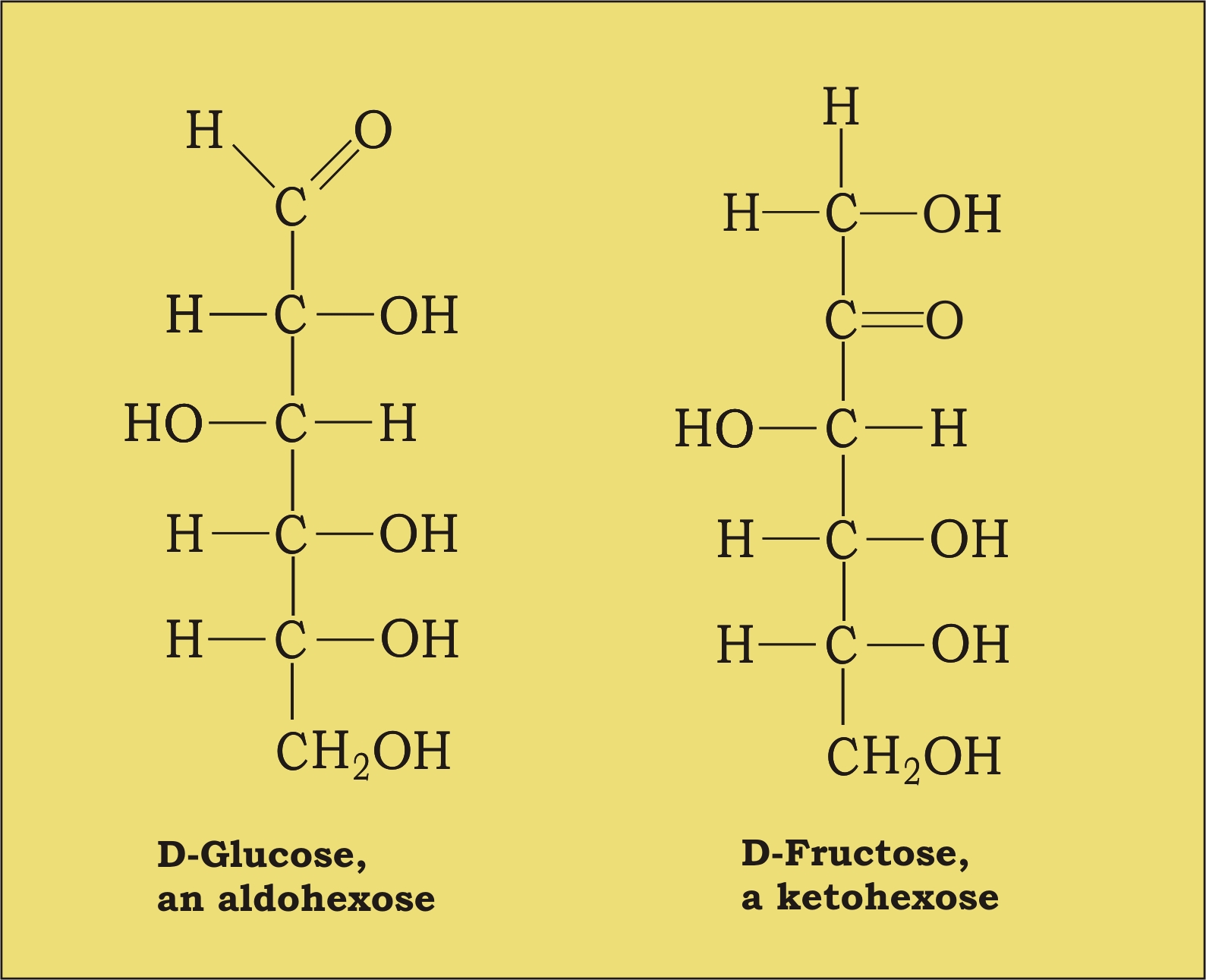
Enantiomers:
- Enantiomers are those isomers that differ in their absolute configuration at each chiral carbon such that they are non-superimposable mirror images to each other.
- For example, D-Glucose and L-Glucose.

TIP: The D and L in the name of glucose refers to the direction of the -OH group of the chiral carbon which farthest from the functional group. D-Glucose has -OH placed on right side while L-Glucose has -OH placed on the left side.
Diastereomers and Epimers:
- These are the isomers that are non-superimposable on each other and are optical isomers of each other.
- Epimers are the diastereoisomers that differ in the stereochemistry at only one stereocenter.
- For example, D-Glucose and D-Galactose differ in the configuration at C-4. They are non-superimposable, and they are not mirror images of each other.

TIP: The diastereoisomers are different compounds with different names and properties while enantiomers differ only in the direction in which they rotate polarized light. They are the same compounds.
Anomers:
- When a molecule such as glucose converts to a cyclic form, it generates a new chiral centre at C-1.
- The carbon atom that generates the new chiral centre (C-1) is called the anomeric carbon.
- Anomers are the epimers that differ in configuration only at the anomeric carbon.
- For example, α-D-glucose and β-D-glucose are anomers.
- The α form has the anomeric -OH group at C-1 on the opposite side of the ring from the CH2OH group at C-5. The β form has the anomeric -OH group on the same side as the CH2OH group.

Study other Related Concepts
Isomers and Stereoisomers Current Topic
"Stay in the loop. Receive exam news, study resources, and expert advice!"
Get Answer to all your questions
Explore on Careers360
JEE Main
RPVT
Colleges By Branches
Colleges By Exam
Colleges By Branch
Colleges By Exams
Colleges By Ownership
Colleges By State
Colleges By Exams
Colleges By Degree
Colleges by State
Colleges by City
Colleges by State
Universities by Branches
By State
Colleges by City
Colleges by State
By State
BE/B.Tech
Diploma
MBA Specialization Colleges
Student Community: Where Questions Find Answers