KCC Institute of Legal and Higher Education, Greater Noida
Law Admissions 2026 Open | Avail Merit-Based Scholarships


55-year old Ritu was sitting in her room, gazing at her phone with glumness. She kept reading the last chat she had with her daughter over and over again. Suddenly, Ritu rejoiced as she got a call from her daughter, Ayesha, on the phone. “Hi Mom, how are you?'' said Ayesha, “I know it's been a week since we talked but, Mom it's been crazy out here. I will call you as soon as things settle down. Bye Mom, love you!”. Ritu felt happy for a moment but that feeling of sorrow pounded her again. A tear rolled down her cheeks as she slowly caressed through her daughter’s belongings. That day, Ritu stayed in Ayesha’s room and wept until her husband came and consoled her.
Also Read | Self-Care Tips To Feel Happy And Rejuvenated
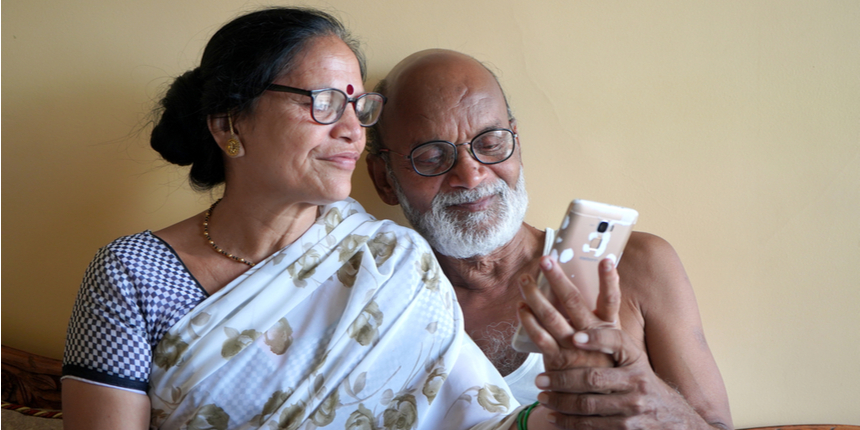
Parents often experience a state of despair and loneliness when their children depart from home to meet the demands of adult life. It could be for studies, work, marriage, living independently, and the like. We are perplexed by the dichotomy of emotions as, on one end, we want our kids to be independent, and on the other end, we want them to remain in sight. This phenomenon is better known as the Empty Nest Syndrome. Although it is not a clinical condition or diagnosis, a prolonged state of sadness emerging from the syndrome can lead to psychological disorders like depression and anxiety.
Just like Ritu, millions of parents experience this syndrome without them even realising that they are going through something like this. The signs may differ in men and women, and may show at different points in time, as research has shown that women being the primary caregivers often experience the syndrome more intensely and earlier than fathers. However, this phase can be daunting for both of them.
Law Admissions 2026 Open | Avail Merit-Based Scholarships
BBA/MBA/PGDM Early Bird Applications Deadline 19th Oct '26. Apply now using coupon code CAREER250 and get ₹250 off the application fee
Let us now understand more in detail, the signs of the empty nest syndrome.
Sadness | Parents may feel a sense of hopelessness and purposelessness after their children move out, which can in turn make them feel overwhelmed.
Irritability And Anger | A sense of helplessness caused by the void may bring about frustration, irritability, or anger. Sometimes, a sense of a lack of control or awareness about your children’s lives may lead to discord in the parent-child relationship.
‘Nothing To Do’ | It is common for parents to feel like they are ‘left with nothing to do’ after their kids move out, since, until then, their lives had been revolving around their kids.
Constant Worry | Constant worry about how your kids must be managing on their own after they left your nest, may be a sign that you are going through the empty nest syndrome.
Marital Stress | It is common for parents to experience some discord with their spouses once they are left to spend time only with each other, after their children have moved out. It often occurs because underlying anxieties get projected onto each other, or because one of the parents might be feeling the void more than the other.
It is a common phenomenon witnessed in typically collectivist cultures like that in India, that parents centre their lives around those of their children, while completely negating their own social and emotional needs as individuals. And once the children leave the nest, there comes a sense of emptiness that parents begin feeling. But, are some parents more vulnerable than others? Maybe yes. Let us look at some of the factors that may make you more predisposed to empty nest syndrome.
 Single-Child Parents Tend To Acutely Feel The Emptiness Of Their Nest
Here are some ways to address empty nest syndrome and re-feather the empty nest once your kids move out.
Give Yourself Time | Embrace the change at your own pace. Your children will still need you, just maybe not in the same way. Be happy that they are becoming capable adults, give them the space they need, and that will help you maintain a healthy relationship with them.
Manage Your Worries | Your kids might call too much as they may be struggling, or they might call too less as they might be adjusting and making sense of the newness. Managing your worries at this point is crucial. If your kids are struggling, encourage and enable them to fight their battles. Focus on empowering them, instead of wanting to rescue them. If they are preoccupied, create and follow a routine for yourself, and be patient.
Family WhatsApp Groups | Create a family group on WhatsApp for discussing important events, expressing feelings, and even for conflict management.
Find Your Passion | It may be a good idea to work on rediscovering yourself. Look out for your hobbies and interests, for instance, you may be good at skills like cooking or painting, and try to expand them into a business. This would help you gain a sense of positivity about yourself.
Engage In Volunteer Work | You may consider volunteering for a cause you care about. It could be working for underprivileged kids, the elderly, animals, and the like. It will help you boost your self-esteem, and also bring about satisfaction.
Bond With Your Partner | You should use this time to bond again with your partner, reminisce on old days, and rekindle love in this second innings of your life and relationship.
Be With People | Reconnect with old friends that you may have not stayed in touch with, meet up, and create new memories while also re-living old ones. Also, joining some social groups may help you feel more accepted and acknowledged.
Seek Therapy | If you consistently feel that the change is taking a toll on you and you are facing difficulty in dealing with it, you may consider seeking therapy with a qualified and experienced therapist.
Ideally, it would be a wiser idea to never completely lose your own identity, as in, your hobbies, interests, and ambitions in the process of parenting your children. Parenting should be more about finding the right balance between caring for your children and doing that for yourself, so that once your children are ready to fly away to create their own nests, you do not feel like you are left with no purpose in your life.
The journey from dropping off our children at preschool to seeing them go off to pursue higher studies or work can be both satisfying and emotionally challenging. If you are struggling with the dramatic change, consider this bittersweet phase as an opportunity to reconnect with yourself and others. Find happiness in the thought your children are growing up to become responsible and self-sufficient adults. Create and enjoy the new luxury of time and space. Do everything you can to make this second innings of your life a satisfying and fulfilling experience.
Nilisha Aggarwal is a Child and Adolescent Psychologist, registered with the Rehabilitation Council of India. She holds extensive, hands-on experience in administering psychological assessments and treating mental health issues among children and adolescents, and is a certified Career Analyst and Psychotherapist. She is Founder, Inside Out Mental Health Clinic.


Law Admissions 2026 Open | Avail Merit-Based Scholarships
BBA/MBA/PGDM Early Bird Applications Deadline 19th Oct '26. Apply now using coupon code CAREER250 and get ₹250 off the application fee
Ranked #36 amongst institutions in Management by NIRF | 100% Placement
Globally Recognized by AACSB (US) & AMBA (UK) | 18 LPA Avg. CTC for PGPM 2026
Leading Design College | 95% Placement Record | Merit-cum-Means Scholarships for Deserving Students
NEET PG All India & State College Predictor with Admission Process Guide