KCC Institute of Legal and Higher Education, Greater Noida
Law Admissions 2026 Open | Avail Merit-Based Scholarships


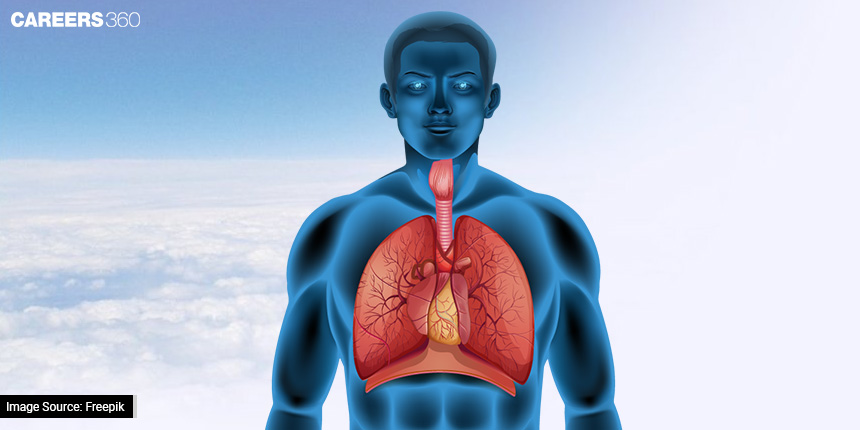
Breathing, a seemingly automatic and involuntary act, is one of the most fundamental processes that sustain human life. The respiratory system, a complex network of organs and tissues, performs this essential function, allowing us to exchange gases with the environment. In this discussion of the human respiratory system, we will focus on the mechanisms behind breathing, understanding how the body ensures a constant supply of oxygen to fuel our cells and removes waste in the form of carbon dioxide.
Law Admissions 2026 Open | Avail Merit-Based Scholarships
BBA/MBA/PGDM Early Bird Applications Deadline 19th Oct '26. Apply now using coupon code CAREER250 and get ₹250 off the application fee
Inhalation (Inspiration)
The diaphragm contracts and moves downward
The intercostal muscles lift the rib cage, expanding the chest cavity
Air rushes into the lungs due to the pressure difference
Exhalation (Expiration)
The diaphragm relaxes, moving upward
The intercostal muscles relax, decreasing the chest cavity's volume
Air is pushed out of the lungs
As we inhale and exhale every second of the day, the marvel of the human respiratory system often goes unnoticed. Yet, within the intricate web of air passages, alveoli, and muscles lies a symphony of coordinated actions that keep us alive. Understanding the anatomy and physiology of the respiratory system not only deepens our appreciation for the complexity of the human body but also underscores the importance of caring for our respiratory health. So, let's take a moment to appreciate the breaths we take and marvel at the remarkable biological dance that sustains our existence.


Law Admissions 2026 Open | Avail Merit-Based Scholarships
BBA/MBA/PGDM Early Bird Applications Deadline 19th Oct '26. Apply now using coupon code CAREER250 and get ₹250 off the application fee
Ranked #36 amongst institutions in Management by NIRF | 100% Placement
Globally Recognized by AACSB (US) & AMBA (UK) | 18 LPA Avg. CTC for PGPM 2026
Leading Design College | 95% Placement Record | Merit-cum-Means Scholarships for Deserving Students
NEET PG All India & State College Predictor with Admission Process Guide