KCC Institute of Legal and Higher Education, Greater Noida
Law Admissions 2026 Open | Avail Merit-Based Scholarships


Mother Nature is a canvas, painted with diverse hues of species, each uniquely adapted to its environment. However, the boundaries between these species are not always as rigid as they may seem. Hybridisation, the interbreeding of different species, has been a phenomenon observed both in the wild and laboratory conditions. This blending of genetic material can result in the creation of hybrid animals – fascinating creatures that embody the diversity and adaptability of life on Earth.
This Story also Contains
Hybridisation occurs when individuals from two different species mate and produce offspring. While this process is more common in plants, it is also documented in various animal species. The genetic material from the parent species combines, creating a hybrid with a unique set of traits.
Hybridisation can happen naturally, driven by environmental factors or the overlap of habitats. However, humans have also played a significant role in creating hybrids through controlled breeding programmes. These programmes aim to capitalise on desirable traits from different species, such as increased resistance to diseases or improved physical characteristics.
One of the most famous examples of hybrid animals is the liger, a crossbreed between a lion and a tiger. Ligers often exhibit characteristics of both parent species, including the prominent mane of a lion and the stripes of a tiger. These majestic creatures are typically larger than their parents, showcasing the unpredictable outcomes of hybridisation.
Law Admissions 2026 Open | Avail Merit-Based Scholarships
BBA/MBA/PGDM Early Bird Applications Deadline 19th Oct '26. Apply now using coupon code CAREER250 and get ₹250 off the application fee
In the equine world, the zonkey is a captivating hybrid between a zebra and a donkey. Known for their distinctive striped legs and donkey-like bodies, zonkeys blur the lines between domesticated and wild equids. These hybrids are not only visually intriguing but also prompt questions about the compatibility of different species within the same biological family.
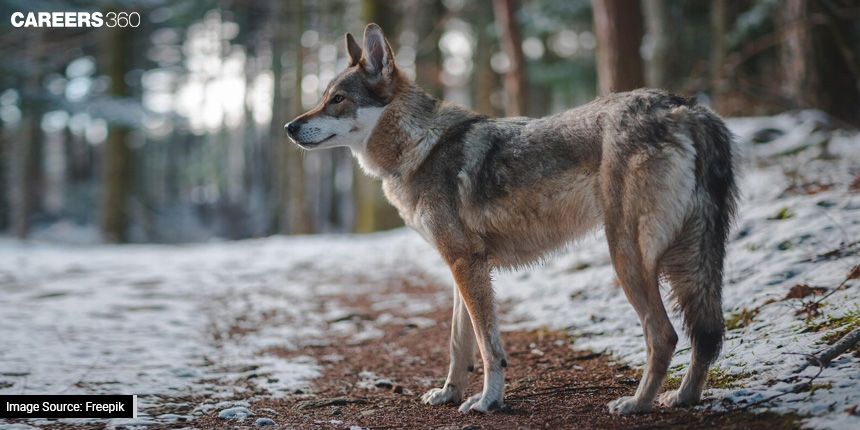
Wolfdogs are the result of breeding a wolf with a domestic dog. Depending on the percentage of wolf and dog genetics, these hybrids can vary widely in appearance and behaviour. While some resemble typical domestic dogs, others retain more wolf-like features. Wolfdogs highlight the interconnectedness of wild and domestic canids and raise ethical considerations regarding their suitability as pets.
While hybridisation can occur naturally, human activities, such as habitat destruction and climate change, are accelerating the process. This raises concerns about the potential loss of distinct species and the creation of hybrid populations that may struggle to adapt to their changing environments. Conservationists grapple with the ethical implications of intervening in natural processes to prevent or manage hybridisation.
Artificial hybridisation through controlled breeding programmes has sparked debates about ethics and animal welfare. Critics argue that creating hybrids for human purposes may compromise the well-being of the animals involved, leading to health issues or behavioural challenges. Striking a balance between human interests and ethical breeding practices remains a complex and ongoing challenge.
Hybrid animals stand as living testaments to the dynamic nature of life and the intricate web of genetic possibilities that shapes the animal kingdom. Whether occurring naturally or as a result of human intervention, hybridisation sparks curiosity, raises ethical questions, and challenges our understanding of species boundaries. As we continue to explore the frontiers of genetic variability, the world of hybrid animals remains a captivating realm where science and nature intersect, offering glimpses into the endless possibilities written in the language of DNA.


Law Admissions 2026 Open | Avail Merit-Based Scholarships
BBA/MBA/PGDM Early Bird Applications Deadline 19th Oct '26. Apply now using coupon code CAREER250 and get ₹250 off the application fee
Ranked #36 amongst institutions in Management by NIRF | 100% Placement
Globally Recognized by AACSB (US) & AMBA (UK) | 18 LPA Avg. CTC for PGPM 2026
Leading Design College | 95% Placement Record | Merit-cum-Means Scholarships for Deserving Students
NEET PG All India & State College Predictor with Admission Process Guide