Emversity Allied Health Programs
Get Job Ready in Healthcare | Employability-Focused Programs


After the completion of the undergraduate (UG), postgraduate (PG), or super-speciality (SS) course, the medical degree is awarded to the candidates. Also, to obtain a medical degree, aspirants must have completed the training or internship for the specified time period. Candidates awarded with a medical degree must be registered with the National Medical Commission (NMC) to practice as a doctor or pursue higher education.
This Story also Contains
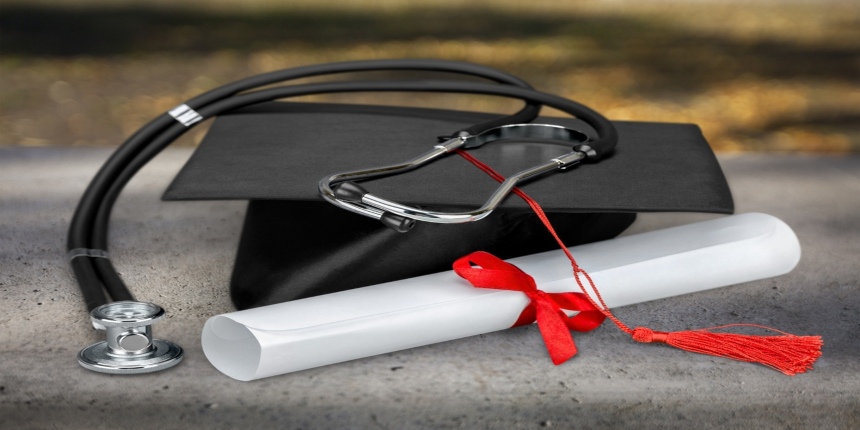
There are many types of medical degrees which are awarded based on the level of education. After qualifying for the NEET UG entrance exam, candidates who successfully complete the UG programme will be awarded medical courses after 12 such as MBBS/BDS/BAMS/BUMS/BHMS/BSMS/BYNS/BVSc-AH courses, as per the selection of their course.
After completion of the UG degree, candidates can either choose to pursue higher studies or practice medicine in various sectors. To pursue PG medical courses, aspirants need to qualify for PG entrance tests such as NEET PG, INI CET, and NEET MDS. After PG medical courses, candidates will be awarded Doctor of Medicine (MD), Master of Surgery (MS), PG Diploma, and Diplomate of National Board (DNB). After PG courses, aspirants can pursue SS degree after which they get admission to Doctorate of Medicine (DM) and Master of Chirurgiae (MCh).
Get Job Ready in Healthcare | Employability-Focused Programs
To get an undergraduate medical degree, students need to fulfill the eligibility criteria and qualify for the National Eligibility cum Entrance Test. Every year, as many as over 1 lakh MBBS, 27,868 BDS, 603 BVSc, and 52,720 BHMS/BSMS/BAMS/BUMS/BNYS medical degrees are awarded in India. Only candidates who fulfill the eligibility requirements, qualify for the NEET-UG exam, complete the 5.5-year academic course, and the mandatory internship are awarded undergraduate degree in medical feild.
The first step toward getting a UG highest degree in medical is qualifying for NEET. The National Testing Agency (NTA) conducts the NEET exam in an offline mode across the country. As per the NEET eligibility criteria, candidates must have studied Physics, Chemistry, and Biology in class 12 and scored at least 50% marks. Check the list of different undergraduate courses for which medical degrees are awarded below.
MBBS – Bachelor of Medicine, Bachelor of Surgery
BDS – Bachelor of Dental Surgery
BAMS – Bachelor of Ayurvedic Medicine and Surgery
BUMS – Bachelor of Unani Medicine and Surgery
BHMS – Bachelor of Homeopathy Medicine and Surgery
BYNS- Bachelor of Yoga and Naturopathy Sciences
B.V.Sc & AH- Bachelor of Veterinary Sciences and Animal Husbandry
Get expert advice on college selection, admission chances, and career path in a personalized counselling session.
In addition to the above-discussed courses, there are numerous medical courses that are offered without NEET. The list of such medical degrees is mentioned below.
Bachelor of Science in Biotechnology
Bachelor of Technology in Biomedical Engineering
Bachelor of Science in Microbiology (Non-Clinical)
Bachelor of Science in Cardiac or Cardiovascular Technology
Bachelor of Perfusion Technology or Bachelor of Science in Cardio-Pulmonary Perfusion Technology
Bachelor of Respiratory Therapy
Bachelor of Science in Nutrition and Dietetics
Bachelor of Science in Genetics
A significant number of medical graduates in India, pursue postgraduate medical degrees to get specialised in the field of their choice. The most popular or preferred postgraduate medical degree is Doctor of Medicine (MD) and Master of Surgery (MS). There are a total of 10,821 Master of Surgery (MS), 19,953 Doctor of Medicine (MD), and 1,979 PG Diploma seats in postgraduate medical courses in India.
To get postgraduate medical degree candidates to need to qualify for national-level entrance tests such as NEET PG and INI CET. Admission to postgraduate medical courses in AIIMS, JIPMER, PGIMER, and NIMHANS is also granted through the INI CET exam. NEET PG entrance test is conducted by the National Board of Examinations (NBE). While the INI CET exam is conducted by the All India Institute of Medical Sciences (AIIMS), Delhi.
In order to be eligible for these national-level entrance examinations, aspirants must possess:
MBBS degree or MBBS provisional pass certificate offered by the concerned University/college
Completed or likely to complete 12 month rotatory internship
Provisional or permanent registration certificate issued by the National Medical Commission (NMC) or State Medical Council (SMC)
The postgraduate medical degrees along with the specializations offered are discussed below.
MD is a professional medical degree that is awarded after MBBS from a recognised medical institute. After completing the course curriculum in a pre-clinical or clinical subject of non-surgical nature, the candidates receive an MD degree. The speciality subjects which candidates can choose for specialization are mentioned in the table below.
S. No | MD speciality | S. No | MD speciality |
1 | Anaesthesiology | 13 | Pharmacology |
2 | Biochemistry | 14 | Physical Medicine and Rehabilitation |
3 | Community Health | 15 | Physiology |
4 | Dermatology | 16 | Preventive and Social Medicine |
5 | Family Medicine | 17 | Psychiatry |
6 | Forensic Medicine | 18 | Radio-Diagnosis |
7 | General Medicine | 19 | Radio-Therapy |
8 | Microbiology | 20 | Tuberculosis and Respiratory diseases |
9 | Paediatrics | 21 | Emergency and Critical care |
10 | Palliative Medicine | 22 | Nuclear Medicine |
11 | Pathology | 23 | Transfusion Medicine |
12 | Skin and Venereal diseases | 24 | Tropical Medicine |
The Masters of Surgery (Latin name Magister Chirurgiae) is an advanced qualification in surgery. The qualification was designed to be awarded as a higher degree to the MBBS degree. The specializations under the Masters of Surgery degree are mentioned in the table above.
S.No | MS Speciality |
1 | Ear, Nose and Throat |
2 | General Surgery |
3 | Ophthalmology |
4 | Orthopaedics |
5 | Obstetrics and Gynaecology |
6 | Dermatology, Venerology and Leprosy |
DNB (Diplomate of National Board) degree is considered equivalent to the MD and MS degrees. To pursue DNB courses, aspirants need to qualify the NEET PG entrance test conducted by the National Board of Examinations (NBE). The duration of the DNB course is 3 years of post-MBBS residency training in teaching hospitals recognised by the board. NBE awards the Diplomate of National Board in 14 broad specialities. The holders of DNB are employed as specialist’s or faculty in any hospital and training institution. These post-MBBS residency programmes are available in the below mentioned specialities.
S. No | DNB Specialty | S. No | DNB Specialty |
1 | Anaesthesiology | 16 | Orthopaedic Surgery |
2 | Anatomy | 17 | Oto-Rhino Laryngology |
3 | Biochemistry | 18 | Paediatrics |
4 | Dermatology | 19 | Pathology |
5 | Emergency Medicine | 20 | Pharmacology |
6 | Family Medicine | 21 | Physical Medicine and Rehabilitation |
7 | Field Epidemiology | 22 | Physiology |
8 | Forensic Medicine | 23 | Immunohematology and transfusion medicine |
9 | General Medicine | 24 | Maternal and Child Health |
10 | General Surgery | 25 | Microbiology |
11 | Health Administration | 26 | Nuclear Medicine |
12 | Ophthalmology | 27 | Obstetric and Gynecology |
13 | Psychiatry | 28 | Respiratory diseases |
14 | Radio-Diagnosis | 29 | Rural Surgery |
15 | Radio-Therapy | 30 | Social and Preventive Medicine |
Super Specialty medical degree is awarded to postgraduate medical specialists after completion of 3 years in an opted speciality. Only candidates who have completed their postgraduate medical degree (MD/MS/DNB) are eligible to pursue a Super Speciality degree. Admission to Super Specialty or postdoctoral medical degree is granted on the basis of entrance examination such as NEET SS, AIIMS DM/M.Ch, JIPMER DM/M.Ch/Fellowship, among others. Post-Doctoral medical degrees in medicine and surgery are also known as Doctorate of Medicine (D.M.) and Master of Chirurgiae (M.Ch), respectively.
In order to be considered for admission to super speciality courses, aspirants need to fulfil certain eligibility criteria, which includes:
Candidates must possess a recognized postgraduate degree (MD/MS/DNB) or provisional pass certificate by the college/university
NMC or SMC registration
The most recommended post-doctoral courses available in the D.M. and M.Ch are mentioned below.
S.No | D.M. Specialty | S.No | D.M. Specialty |
1 | Psychiatry | 11 | Cardiology |
2 | Cardiac-Anaesthesiology | 12 | Pulmonary and Sleep disorders |
3 | Cardiology | 13 | Obstetrics and Gynecology |
4 | Haematology | 14 | Nuclear Medicine |
5 | Pharmacology | 15 | Cardiac-Radiology |
6 | Anaesthesiology, Pain Medicine and Critical Care | 16 | Paediatrics |
7 | Endocrinology | 17 | Nephrology |
8 | Gastroenterology | 18 | Neuro-Anaesthesiology and Critical Care |
9 | Medicine and Microbiology | 19 | Neurology |
10 | Onco-Anesthesiology and Palliative Medicine | -- | -- |
S.No | M.Ch Specialty |
1 | Surgery |
2 | Cardiothoracic and Vascular Surgery |
3 | Gastrointestinal Surgery |
4 | Obstetrics and Gynaecology |
5 | ENT |
6 | Neuro Surgery |
7 | Pediatric Surgery |
8 | Plastic and Reconstructive Surgery |
9 | Surgical Oncology |
10 | Surgery Trauma Centre |
11 | Urology |
Pursuing a medical degree requires utmost dedication and focus. As the level of study increases, the level of completion also increases. Candidates must choose the medical degree they wish to pursue carefully. Getting a medical degree in a particular specialty after graduation is a choice that candidates must take after considering all possibilities.
To pursue a medical degree candidates need to qualify highly competitive national level entrance tests such as NEET, NEET PG, and INI CET. Aspirants must plan their preparation of NEET-UG, and other exams wisely. In conclusion, candidates can opt for many other options in the field of medicine. Only the dedication and right decision is what required the most.
The doctor degree name list or highest degree in the field of medicine is the "Doctor of Medicine" (M.D.) or "Doctor of Medical Science" (D.M.). These types of doctor degrees are awarded to medical doctors who have completed their medical education, residencies, and possibly fellowships, and have achieved a high level of specialisation in a particular medical field or sub-specialty. The doctor degree name list in India can be checked here.
Also Read -

On Question asked by student community
Hello Savi
Please check the link below:
Hope it helps.
Hello, for AP NEET PG Category C seats, NRI documents are generally required if you are applying under the NRI quota, and eligibility depends on the applicable counselling rules. The fee payment currency and procedure should be confirmed from the current Dr. NTRUHS notification at its official website drntr.uhsap.in.
Hello, the NEET PG stipend at Parul University depends on the postgraduate course, academic year and applicable university policies.
Hello, some B.Sc Nursing colleges may offer admission without NEET, but the admission process depends on the college and its eligibility rules. You can find colleges offering B.Sc Nursing admission without NEET here: https://medicine.careers360.com/articles/bsc-nursing-admission-without-neet
Hello, you can pursue BPT in Kerala without NEET UG. Admission is generally based on the LBS Centre rank list and the applicable admission process. You can check BPT colleges in Kerala and their details here: https://medicine.careers360.com/colleges/list-of-bpt-in-physiotherapy-colleges-in-kerala
the product 'P' will be ,


| Column A | Column B |
| A |
a) Organisation of cellular contents and further cell growth. |
| B |
b) Leads to formation of two daughter cells. |
| C |
c) Cell grows physically and increase volume proteins,organells. |
| D |
d) synthesis and replication of DNA. |
Match the correct option as per the process shown in the
0.16 g of dibasic acid required 25 ml of decinormal solution for complete neutralisation. The modecular weight of the acid will be
32
64
128
256
0xone is

Know possible Govt/Private MBBS/BDS Colleges based on your NEET rank
College Predictors Webinars One to One Counselling Regular Updates Medical Almanac
Get Job Ready in Healthcare | Employability-Focused Programs
Ranked among the top Dental Colleges for 7 consecutive years by India Today poll
Ranked #19 by NIRF, NAAC A++ Accredited | Recognized by dental council of India