SRM Kattankulathur Dental College and Hospital, Kattankulathur
Ranked #19 by NIRF, NAAC A++ Accredited | Recognized by dental council of India


Every year, over 20 lakh students appear for NEET, competing for a limited number of MBBS and BDS seats amid intense pressure and uncertainty. In recent years, concerns around exam disruptions, re-examinations, and delays in counselling have only added to the anxiety for students trying to secure a future in healthcare. The views and insights shared in this article are contributed by Nalin Saluja, Co-Founder & CTO, Virohan.
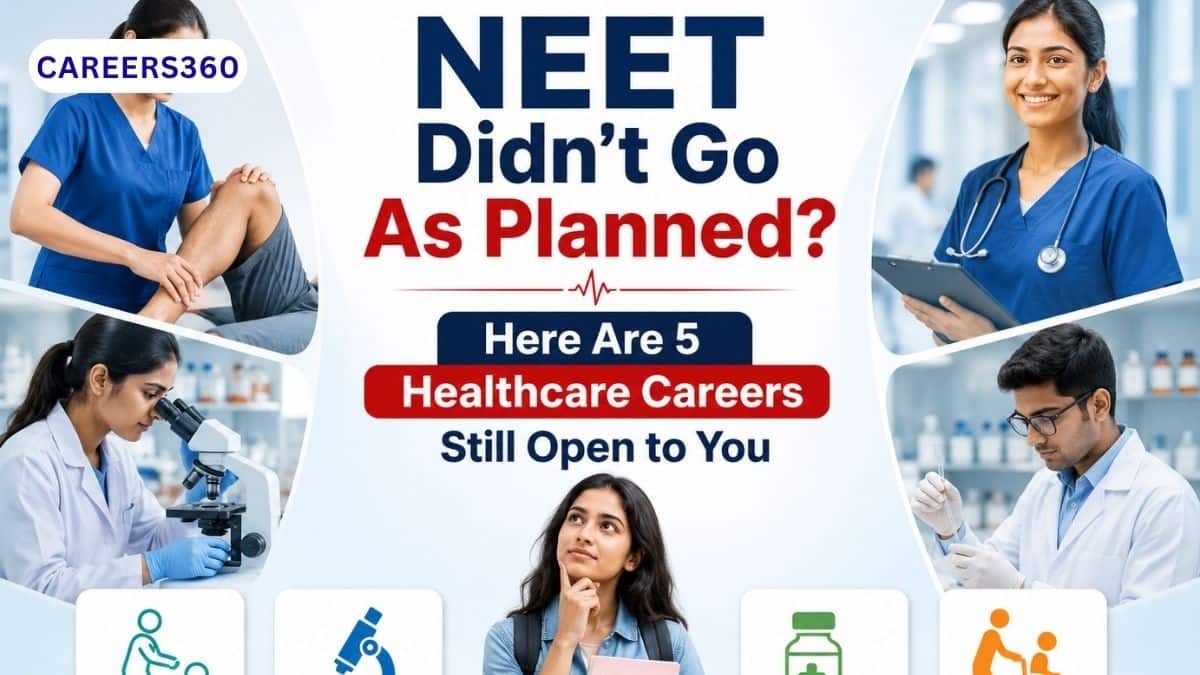
At the same time, India’s healthcare ecosystem is expanding rapidly, driving strong demand for skilled allied & healthcare professionals across diagnostics, surgical care, rehabilitation, laboratory sciences, and vision care. These are highly specialized, front-line roles that are essential to healthcare delivery and patient outcomes, yet many areas continue to face significant workforce shortages.
With strong placement prospects, increasing international demand, and a clear path from classroom learning to clinical practice through industry-integrated training, allied and healthcare is emerging as a promising and future-ready career pathway for students looking to build a meaningful career in the healthcare sector beyond NEET.
Ranked #19 by NIRF, NAAC A++ Accredited | Recognized by dental council of India
Special Scholarship for Students from Goa (Get an exclusive scholarship of ₹20,000 if you're a Goa-based student) | Bringing Parul Education Trust's 30-year Education Legacy to Goa
Quick answer: Yes, students can pursue several healthcare degrees without NEET in AY 2026-27. Options include B.AOTT, B.MRIT, B.MLS, BPT, and B.Optom, subject to university-specific eligibility criteria. For BPT, NEET-UG has been deferred to AY 2027-28 as per the NCAHP letter dated 02 March 2026.
Here are five promising healthcare career paths that offer excellent opportunities for growth, job stability, and a rewarding future in the medical field.
Career option | NEET status for AY 2026-27 | Career direction |
|---|---|---|
Bachelor of Anaesthesia and Operation Theatre Technology | Not required | Operation theatre and anaesthesia support |
Bachelor of Medical Radiology and Imaging Technology | Not required | Diagnostic imaging and radiology support |
Bachelor of Medical Laboratory Science | Not required | Laboratory diagnostics and pathology support |
Bachelor of Physiotherapy | Deferred to AY 2027-28 | Rehabilitation and mobility care |
Bachelor of Optometry | Not required | Vision care and eye-health screening |
If you see yourself thriving in high-pressure, fast-paced medical environments, this is a career built around precision, teamwork, and real-time patient care. Students pursuing BAOTT courses are trained to become Operation Theatre Technicians, Anaesthesia Technicians, Surgical Assistants, and OT Coordinators – professionals who play a critical role before, during, and after surgical procedures. They assist anaesthesiologists, manage operation theatre equipment, support surgical teams, and help ensure patient safety throughout the procedure.
With rising demand for surgical and critical care services, trained professionals in this field are increasingly sought after across derma clinics, dental clinics, cosmetic surgery centres, emergency care units, and specialised surgical facilities. Many courses today also combine classroom learning with hands-on clinical exposure and internships, helping students transition seamlessly from training to practice.
Bachelor of Medical Radiology and Imaging Technology (BMRIT) course equips students with the technical and clinical skills required to work with advanced diagnostic imaging equipment used in modern healthcare. The course combines classroom learning with practical training in areas such as X-rays, CT scans, MRI, ultrasound, and other imaging technologies that support accurate diagnosis and treatment planning.
Graduates can go on to build careers as Radiology Technicians, MRI Technicians, CT Scan Technicians, X-Ray Technicians, and Imaging Technologists – roles that are becoming increasingly critical as diagnostic healthcare expands across India. These professionals work closely with doctors and healthcare teams to support timely diagnosis and improve healthcare delivery and patient outcomes. With rising demand for diagnostics and preventive healthcare, opportunities in this field are growing across hospitals, diagnostic imaging centres, trauma care units, and specialised clinics.
Medical laboratory professionals play a crucial role in disease detection, prevention, and treatment planning by conducting tests on blood, tissues, and other clinical samples that guide medical decisions. A Bachelor of Medical Laboratory Science (BMLS) equips students with practical and technical expertise in areas such as clinical biochemistry, microbiology, pathology, haematology, and molecular diagnostics, preparing them to work in fast-evolving diagnostic and research-driven healthcare environments.
With preventive healthcare and routine diagnostics becoming mainstream, this role has evolved from background support to a core clinical function. The field offers strong job stability and a direct pathway to specialisation in haematology, microbiology, or molecular diagnostics. Graduates can also pursue postgraduate studies and move into advanced research, data-driven healthcare, laboratory management, and emerging areas of medical science and diagnostic innovation. As healthcare systems increasingly rely on accurate and timely diagnostics, demand for skilled laboratory professionals continues to grow across hospitals, diagnostic laboratories, research centres, and public health institutions.
This course prepares students to work in one of the fastest-growing areas of healthcare focused on recovery, rehabilitation, mobility, and pain management. Bachelor of Physiotherapy (BPT) course combines anatomy, exercise therapy, neuroscience, and rehabilitation sciences with hands-on clinical training, enabling students to work closely with patients recovering from injuries, surgeries, neurological conditions, and lifestyle-related disorders. Notably, NEET 2026 has been deferred as a mandatory requirement for admissions until the 2027 intake, continuing to keep the pathway accessible for students interested in the field.
With rising awareness around preventive healthcare, sports injuries, post-operative recovery, and ageing populations, physiotherapy has emerged as a highly respected and in-demand profession. Graduates can build careers as Physiotherapists, Rehabilitation Specialists, Sports Therapists, and Mobility Experts across hospitals, rehabilitation centres, sports clinics, wellness centres, and home healthcare services. The field also offers significant professional autonomy, with many physiotherapists going on to establish independent practices or work with sports organisations, corporate wellness centres, and international clients.
Eye health is gaining importance in a digital-first world. Optometrists are trained to examine, diagnose, and manage vision-related issues, and often serve as the first point of contact for eye care. Bachelor of Optometry (B.Optom) program trains students to examine, diagnose, and manage eye and vision-related conditions, while building expertise in vision testing, corrective lenses, eye disease screening, and patient care. Graduates can go on to work as Optometrists, Vision Care Specialists, and Eye Care Professionals, often serving as the first point of contact in eye healthcare.
With increasing screen usage and growing awareness around preventive eye care, demand for trained optometry professionals continues to rise across the healthcare and vision care ecosystem. Career opportunities span optical retail chains such as Lenskart, Titan Eye+, specialist eye hospitals like Eye-Q, Aravind Eye Hospital, clinical eye care centres, and independent practice, offering strong scope for long-term career growth and specialisation.
Healthcare today runs on a highly skilled, multidisciplinary workforce where precision, specialization, and collaboration define patient outcomes. As allied & healthcare careers become more structured, deeply specialized, and aligned with global standards, institutions across India are increasingly partnering with industry and healthcare providers to offer hands-on, job-oriented training that prepares students for real-world clinical environments. With growing demand both in India and internationally, these pathways are emerging as future-ready careers that combine employability, specialization, and long-term growth.
If NEET didn’t go your way, there’s another path to building a meaningful career at the heart of a rapidly evolving healthcare ecosystem.
Get expert advice on college selection, admission chances, and career path in a personalized counselling session.
Apart from the traditional degree based healthcare courses mentioned above, students can also explore skill-based and industry-oriented healthcare training programs offered by various institutions in India. Platforms like 'Virohan' provide courses in allied healthcare domains to equip students with job-ready skills depending on their career goals, eligibility, and preferred specialisation. The allied health care programs at Virohan are designed in collaboration with healthcare industry partners and focus on practical training, internships, and job readiness. The allied health sciences programs offered by Virohan without NEET includes:
Frequently Asked Questions (FAQs)
Students can consider B.AOTT, B.MRIT, B.MLS, BPT, and B.Optom, depending on their subject background and university eligibility criteria. For AY 2026-27, BPT is also open without mandatory NEET because NCAHP has deferred the NEET requirement to AY 2027-28.
No. For AY 2026-27, NEET-UG is not mandatory for BPT. The NCAHP letter dated 02 March 2026 deferred the NEET requirement for B.PT to AY 2027-28.
Yes, B.MRIT is generally available without NEET in AY 2026-27. Students should verify eligibility directly with the university because subject requirements and application rules may vary.
B.MLS is better suited to students interested in laboratory diagnostics, pathology, microbiology, and haematology. B.MRIT is better suited to students interested in imaging technologies such as X-ray, CT, MRI, and ultrasound. The right choice depends on the kind of clinical environment the student prefers.

On Question asked by student community
Hello Students,
For the NEET UG 2026 Question Paper PDF with Answer Key and Solutions, refer to the article below:
https://medicine.careers360.com/articles/neet-previous-year-question-paper-with-solution
Hello Student,
You can check the resource provided below:
Download NEET Previous 10 Years Question Papers with Solutions PDF
You can also check the NEET 2026 question paper with solutions
Hope this helps!
Hello Chetan,
Here are the links you asked for. I hope they serve your purpose.
Hello Suma,
Here are the links you asked for. I hope they serve your purpose.
Hello Bhanuday,
Here are the links you requested. I hope you find them helpful.
the product 'P' will be ,


| Column A | Column B |
| A |
a) Organisation of cellular contents and further cell growth. |
| B |
b) Leads to formation of two daughter cells. |
| C |
c) Cell grows physically and increase volume proteins,organells. |
| D |
d) synthesis and replication of DNA. |
Match the correct option as per the process shown in the
0.16 g of dibasic acid required 25 ml of decinormal solution for complete neutralisation. The modecular weight of the acid will be
32
64
128
256
0xone is

Ranked #19 by NIRF, NAAC A++ Accredited | Recognized by dental council of India
Special Scholarship for Students from Goa (Get an exclusive scholarship of ₹20,000 if you're a Goa-based student) | Bringing Parul Education Trust's 30-year Education Legacy to Goa
Ranked among the top Dental Colleges for 7 consecutive years by India Today poll