Emversity Allied Health Programs
Get Job Ready in Healthcare | Employability-Focused Programs


BAMS as a Career in India - In the present day, obtaining a Bachelor's degree in Ayurvedic Medicine and Surgery (BAMS) has gained enormous importance and opened up lucrative career opportunities for many. The degree program is awarded to students who have studied modern medicine and traditional Ayurveda. Careers360 provides a comprehensive view of BAMS as a career in India. Find out more in the following sections.
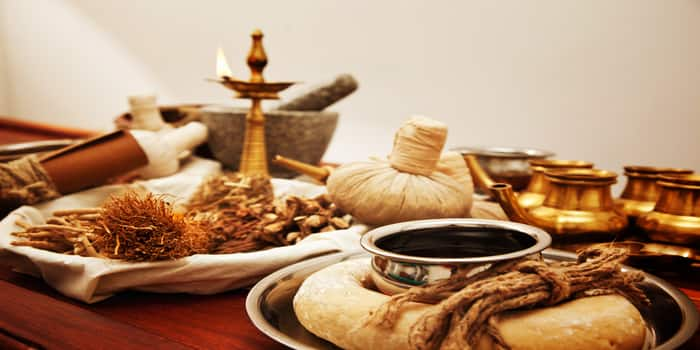
Among the world's ancient medical systems, Ayurveda is one of the best-known and is recognized internationally, as proven by the WHO choosing India to launch a traditional medicine facility in 2020 to foster research and awareness. The ancient science of Ayurveda is rapidly integrating into 21st-century life, from frankincense toothpaste to turmeric milk and mouthwash to coconut oil pulling.
The BAMS career path in India has evolved; it has shifted and altered as policy corridors and consumers have expressed an increasing interest in it. According to a research report, the Indian ayurvedic products market is valued at INR 515.5 billion. It is estimated that more than 41 per cent of the Indian personal care market is devoted to Ayurvedic products.
Get Job Ready in Healthcare | Employability-Focused Programs
Ayurvedic studies are in higher demand now more than ever. Across the country, the subject is receiving positive attention. The rehabilitative process leads to patients' rapid adoption after a period of wariness and suspicion. As a result of government efforts to employ veterans who know Ayurveda and are eager to push for more significant interaction between modern and traditional medical systems, the change in environment is well supported," says Prof. (Dr.) Sanjay Gupta, Medical Superintendent and Head of Department at the All India Institute of Ayurveda, Delhi.
According to the Indian Medicine Central Council Act, of 1970, BAMS is an undergraduate degree specializing in Ayurvedic medicine. With a duration of 5.5 years, BAMS graduates are given the titles of Doctor and Vaidya after successfully completing 4.5 years of the main study period and one year of compulsory internship.
A BAMS graduate receives the same recognition, length, structure, and selection criteria as an MBBS graduate. Bhawna Dutt, a BAMS graduate from Tibbia College and Hospital of the University of Delhi, says, "I knew I didn't want to pursue it, and BAMS was an attractive alternative to becoming a doctor."
Get expert advice on college selection, admission chances, and career path in a personalized counselling session.
"BAMS" stands for "Bachelor of Ayurvedic Medicine and Surgery," and it is an undergraduate degree program in the field of Ayurvedic medicine. Ayurveda is an ancient Indian system of medicine that focuses on natural healing and holistic wellness. A BAMS degree equips students with knowledge and skills related to traditional Ayurvedic practices, herbs, therapies, and treatments. The BAMS course duration is typically 5 and a half years, including a one-year internship.
In India, Ayurvedic doctors are being sought out to bridge the gap in doctor-patient ratios, and the government is providing Ayurvedic research grants. In addition, Prof. (Dr.) Sanjay Gupta said that after BAMS career options abound for students who are passionate about the 5,000-year-old Ayurvedic system of medicine and that times are looking good.
BAMS goes beyond imparting Ayurvedic knowledge. Bhawna, a BAMS student, explains, "Dual understanding of both modern medicine and ayurvedic medicine is crucial to our career. We received training in allopathic medicines in lesser detail during the 1.5 years before our internship began. During my time at allopathic hospitals like Sanjay Gandhi Memorial Hospital and NC Joshi Hospital, I attended about nine hours of classes that provided me with the confidence and comfort to practice alternative medicine. The course also helped me gain a deeper understanding of ayurvedic medicine along with modern medicine.”
In a lighter vein, Bhawna states, "Who knows, in the future, modern medicine students may also be taught alternative medicine."
Ayurveda Medicine and Surgery Bachelors are divided into four professional years. These years are divided into three 12-month professional years each and one 18-month professional year (1.5 years). As students begin their first year of study, they learn anatomy, physiology, and the history of the Ayurvedic system of medicine, followed by toxicology, pharmacology, etc.
As part of the curriculum during the third and fourth years, there is practical training through clinical practice and specialized knowledge. The fifth year is wholly devoted to internship and includes Ayurvedic therapies such as mud therapy, acupressure, etc.
BAMS is open to students who have passed 10+2 in medical streams (Physics, Chemistry, and Biology). From 2017 onwards, BAMS admissions have been standardised, with the National Eligibility cum Entrance Test (NEET) serving as the sole basis for admission. In order to apply to BAMS, students must take NEET, the exact requirement of MBBS candidates. For admission, applicants must score at least the 50th percentile in NEET results (40th percentile for reserved categories).
"It is an enriching career path, especially for a student who believes in the Ayurvedic system of medicine. Don't be afraid to pursue this path because it will take 5.5 years," said Dr Gupta. He contemplated the differences between Ayurvedic and modern medicine. Ayurvedic medicine offers effective solutions to lifestyle disorders like joint pain, obesity, diabetes, and other lifestyle disorders. He compared the practices of Ayurvedic and Modern medicine. "Modern medicine emphasizes results but has a greater number of side effects."
"It is a gratifying profession. This career field has a lot to offer for a student with a belief in the Ayurvedic system of medicine. Don't run from it because it will take 5.5 years," said Dr Gupta. Comparing the practices of Ayurvedic and Modern medicine, he contemplated, "Lifestyle disorders such as joint pain, obesity, diabetes are rampant today, and Ayurvedic medicines offer an effective solution to them. Modern medicine is result-oriented, but has more side effects." In addition, Bhawana said, "For osteoarthritis (joint pain), for instance, modern medicine would only be effective in treating osteoarthritis (joint pain) as long as you take anti-inflammatory drugs. It can be beneficial to resort to Ayurvedic treatment at an appropriate juncture to avoid costly surgeries and medicines."
Due to the country's boom in the Ayurveda industry, the demand for BAMS graduates has also risen. A wide range of career opportunities is available after completion of the course. An excellent place to begin treatment and practice after graduation is by joining the government or private hospitals. Graduates of BAMS may work in government hospitals, dispensaries, and other public institutions as Medical Officers.
Among the fields of Ayurveda that are popular worldwide, beyond just India, are Panchkarma and Kshar Sutra Therapy. The popularity of these therapies is coupled with the fact that they are highly rewarding in terms of money. Also, graduates can work in the pharmaceutical and ayurvedic drug manufacturing industries or open their own clinics.
There is growing popularity of Panchkarma therapy around the world, particularly in Kerala. As part of Panchkarma, the body is detoxified through treatments. There is no doubt that it is a lucrative career opportunity. An individual can easily earn 25,000 to 30,000 per therapy, usually lasting from 15 to 30 days. "Kshar Sutra is associated with surgery, and it treats anorectal diseases such as piles, fistula, etc.," Bhawana explains.
The study of Doctor of medicine (MD) / Master of surgery (MS) is important if one wants to specialize and become a researcher or academician. There are various post-graduation specialisations after BAMS, including medicine, gynaecology, surgery, and panchakarma.
Another booming field to pursue is clinical research. The course may be followed by a master's degree in hospital management or healthcare management in addition to general specialisations. Those with advanced degrees can apply for research positions at organizations like the Central Council for Research in Ayurvedic Sciences (CCRAS). There are other options, including teaching.
'The All India Institute of Medical Studies, AIIMS at Delhi has initiated a research centre focused on the convergence of modern medicine and traditional medicine with an emphasis on yoga and Ayurveda. Bhawna shared that she and her colleagues often go there to give presentations, present findings, and have productive discussions.
In addition to having enough career options, it's necessary to have a variety of interests. A person's passion for a field profoundly impacts their ability to succeed in that field. We are the last resort of people who have attempted every other type of remedy before they come to Ayurvedic medicine. According to Bhawna, "One wonders what miracles Ayurveda could perform if we consulted it at the onset of a disease.
The salary for BAMS graduates in India varies depending on factors such as experience, location, and type of employment. On average, fresh BAMS graduates can expect a starting salary ranging from around Rs. 2 to 5 lakhs per annum. With experience and specialisation, the salary can increase significantly. Private clinics, hospitals, and wellness centers might offer different salary structures compared to government health departments or research institutions. The income potential for BAMS practitioners can grow substantially as they establish themselves and gain expertise in the field of Ayurvedic medicine.

On Question asked by student community
Hello Savi
Please check the link below:
Hope it helps.
Hello, for AP NEET PG Category C seats, NRI documents are generally required if you are applying under the NRI quota, and eligibility depends on the applicable counselling rules. The fee payment currency and procedure should be confirmed from the current Dr. NTRUHS notification at its official website drntr.uhsap.in.
Hello, the NEET PG stipend at Parul University depends on the postgraduate course, academic year and applicable university policies.
Hello, some B.Sc Nursing colleges may offer admission without NEET, but the admission process depends on the college and its eligibility rules. You can find colleges offering B.Sc Nursing admission without NEET here: https://medicine.careers360.com/articles/bsc-nursing-admission-without-neet
Hello, you can pursue BPT in Kerala without NEET UG. Admission is generally based on the LBS Centre rank list and the applicable admission process. You can check BPT colleges in Kerala and their details here: https://medicine.careers360.com/colleges/list-of-bpt-in-physiotherapy-colleges-in-kerala
the product 'P' will be ,


| Column A | Column B |
| A |
a) Organisation of cellular contents and further cell growth. |
| B |
b) Leads to formation of two daughter cells. |
| C |
c) Cell grows physically and increase volume proteins,organells. |
| D |
d) synthesis and replication of DNA. |
Match the correct option as per the process shown in the
0.16 g of dibasic acid required 25 ml of decinormal solution for complete neutralisation. The modecular weight of the acid will be
32
64
128
256
0xone is

Know possible Govt/Private MBBS/BDS Colleges based on your NEET rank
College Predictors Webinars One to One Counselling Regular Updates Medical Almanac
Get Job Ready in Healthcare | Employability-Focused Programs
Ranked among the top Dental Colleges for 7 consecutive years by India Today poll
Ranked #19 by NIRF, NAAC A++ Accredited | Recognized by dental council of India