SRM Kattankulathur Dental College and Hospital, Kattankulathur
Ranked #19 by NIRF, NAAC A++ Accredited | Recognized by dental council of India


Most frequently asked concepts in NEET Chemistry can help NEET 2027 aspirants identify the concepts, formulas, reactions and question patterns that have appeared repeatedly in recent NEET papers. Chemistry carries 45 questions and 180 marks in the NEET exam, covering Physical, Organic and Inorganic Chemistry. Analysing previous year questions helps students understand how these concepts are tested and prioritise their revision.
This Story also Contains
An analysis of NEET Chemistry papers from 2021 to 2026 shows that chapters such as Coordination Compounds, Hydrocarbons, Organic Chemistry: Some Basic Principles and Techniques, Chemical Bonding, Thermodynamics and Solutions have remained important across multiple years. However, chapter-wise question distribution changes from one examination to another, so recurring concepts should be used for revision priority rather than as predictions for NEET 2027.
This article provides a chapter-wise analysis of frequently tested Chemistry concepts, along with recent question trends and practice questions. Students can use these concepts with NCERT, previous year questions and mock tests to strengthen their preparation for NEET 2027.
NEET Chemistry paper covers Physical, Organic and Inorganic Chemistry and has 45 questions carrying 180 marks. Analysing the NEET Chemistry question papers from 2021 to 2026 reveals that the distribution of questions changes every year, but there are some chapters which continue to remain important every year.
Physical Chemistry: The important chapters in Physical Chemistry are Thermodynamics, Solutions, Chemical Kinetics, Equilibrium, Electrochemistry and Basic Concepts of Chemistry.
Organic Chemistry: The important chapters in Organic Chemistry include Organic Chemistry: Some Basic Principles and Techniques, Hydrocarbons, Alcohols, Phenols and Ethers, Haloalkanes and Haloarenes, Aldehydes, Ketones and Carboxylic Acids and Amines.
Inorganic Chemistry: The important chapters in Inorganic Chemistry are Coordination Compounds, Chemical Bonding, Classification of Elements and Periodicity, p-Block Elements and d- and f-Block Elements.
In the six-year trend, the most weightage has been in Coordination Compounds and Hydrocarbons, whereas Organic Chemistry: Some Basic Principles and Techniques got the maximum questions in 2026.
Get expert advice on college selection, admission chances, and career path in a personalized counselling session.
Based on the analysis of NEET Chemistry papers from 2021 to 2026, certain chapters and concepts are repeatedly tested. Focusing on these high-frequency topics can help students maximise their scores. Students can also check the top 5 NEET chemistry chapters for better preparation. Here’s a list of the most important NEET 2027 chemistry concepts:
Chemistry Section | High-Weightage Chapter | Most Frequently Asked Concepts |
Physical Chemistry | Basic Concepts of Chemistry | Mole concept, stoichiometry, limiting reagent, empirical and molecular formula |
Thermodynamics | Enthalpy, Hess's law, Gibbs free energy, spontaneity, entropy | |
Equilibrium | Le Chatelier's principle, equilibrium constant (Kc & Kp), ionic equilibrium, pH, buffer solutions | |
Chemical Kinetics | Rate law, order and molecularity, rate constant, half-life, Arrhenius equation | |
Electrochemistry | Nernst equation, electrochemical cells, conductivity, Kohlrausch's law | |
Organic Chemistry | General Organic Chemistry (GOC) | Inductive effect, resonance, hyperconjugation, acidity-basicity, reaction intermediates |
Hydrocarbons | Alkanes, alkenes, alkynes, electrophilic addition, free radical substitution | |
Alcohols, Phenols and Ethers | Preparation methods, physical properties, important reactions, acidity of phenols | |
Aldehydes, Ketones and Carboxylic Acids | Nucleophilic addition, oxidation, reduction, named reactions | |
Amines | Basicity, preparation methods, diazotisation, reactions with nitrous acid | |
Biomolecules | Carbohydrates, proteins, vitamins, nucleic acids | |
Inorganic Chemistry | Chemical Bonding and Molecular Structure | VSEPR theory, hybridisation, molecular geometry, dipole moment, MOT |
Coordination Compounds | Ligands, nomenclature, isomerism, crystal field theory, magnetic properties | |
Periodic Table and Periodicity | Atomic size, ionisation enthalpy, electron affinity, periodic trends | |
d- and f-Block Elements | Electronic configuration, oxidation states, colour, magnetic behaviour, important compounds | |
p-Block Elements | Important compounds, trends, chemical properties, NCERT-based reactions |
Understanding the chapter-wise weightage helps students focus on topics that carry the most marks and appear frequently in NEET Chemistry from 2021 to 2026.
Chapter | 2021 | 2022 | 2023 | 2024 | 2025 | 2026 |
1 | 1 | 1 | 1 | 3 | 2 | |
3 | 3 | 2 | 3 | 2 | 1 | |
Classification of Elements & Periodicity | 0 | 0 | 4 | 3 | 4 | 2 |
4 | 3 | 3 | 3 | 2 | 3 | |
3 | 2 | 1 | 4 | 3 | 3 | |
1 | 1 | 1 | 3 | 1 | 1 | |
1 | 1 | 1 | 1 | 1 | 2 | |
3 | 4 | 2 | 2 | 0 | 1 | |
2 | 3 | 2 | 1 | 1 | 4 | |
2 | 1 | 2 | 6 | 5 | 6 | |
3 | 3 | 0 | 5 | 3 | 2 | |
1 | 2 | 2 | 1 | 0 | 2 | |
1 | 2 | 1 | 2 | 3 | 2 | |
0 | 2 | 3 | 4 | 4 | 2 | |
3 | 3 | 1 | 5 | 4 | 6 | |
3 | 2 | 1 | 2 | 2 | 0 | |
2 | 2 | 4 | 2 | 1 | 0 | |
5 | 2 | 3 | 0 | 1 | 2 | |
Amines | 2 | 2 | 4 | 0 | 3 | 1 |
1 | 0 | 1 | 2 | 2 | 3 |
This section provides previous year NEET Chemistry questions (2021–2026) based on the most frequently asked concepts. Students can use these important NEET chemistry questions to practice high-yield topics, understand repeated patterns, and improve their accuracy in the Chemistry section.
Ques: For a reaction A→B, the enthalpy of reaction is ΔH=−4.2 kJ mol−1 and the enthalpy of activation is Ea=9.6 kJ mol−1. The correct potential energy profile for the reaction is shown in the option. (NEET 2021)
Chapter: Chemical Kinetics
Option 1)
Option 2)
Option 3)
Option 4)
Correct answer: Option 2
Explanation: For an exothermic reaction, the enthalpy of the reactant will be greater than the enthalpy of the product and as a result, the energy profile diagram will look like
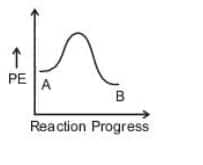
Hence, the answer is option (2).
Ques: Which one of the following alcohols reacts instantaneously with Lucas reagent? (NEET 2024)
Chapter: Alcohols Phenols and Ethers
Option 1) CH3−CH2−CH2−CH2OH
Option 2)
Option 3)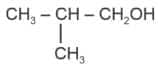
Option 4)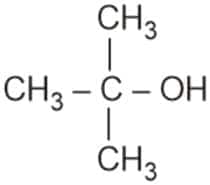
Correct answer: Option 4
Explanation: Tertiary alcohols react instantaneously with Lucas reagent and give immediate turbidity. In case of tertiary alcohols, they form halides easily with Lucas reagent.
Hence, the answer is option (4).
Ques: Given below are two statements:
Statement I: A hypothetical diatomic molecule with bond order zero is quite stable. Statement II: As the bond order increases, the bond length increases.
In light of the above statements, choose the most appropriate answer from the options given below:
Chapter: Chemical Bonding and Molecular Structure
Option 1) Statement 1 is false but Statement II is true
Option 2) Both Statement I and Statement II are true
Option 3) Both Statement I and Statement II are false
Option 4) Statement 1 is true but Statement II is false
Correct answer: Option 3
Explanation: A bond order of zero means no net bonding between the atoms, indicating the molecule cannot exist or is highly unstable. So the first statement is false
As the bond order increases, the bond length decreases because stronger bonding pulls the atoms closer together. And also the second statement is false
So the correct answer is (3) Both Statement I and Statement II are false
Hence, the correct answer is option (3).
The exact phrasing or numbers may vary in the questions, but the NEET exam can use various methods of testing the very same concepts, reactions, formulas and applications. The concepts of Coordination Compounds, for eg, can be assessed through nomenclature in one year and through magnetic properties or isomerism in another.
That is why students should use previous year papers for identifying the recurring concepts and question types instead of memorising the exact questions which will be asked again in NEET 2027.
Frequently Asked Questions (FAQs)
The basic concepts of chemistry for NEET include atomic structure, mole concept, chemical equations, stoichiometry, laws of chemical combination, concentration units, and dimensional analysis, which form the foundation for understanding physical, organic, and inorganic chemistry.
The hardest chapter in NEET Chemistry is often considered to be Thermodynamics or Organic Chemistry because they involve complex concepts and multiple formulas and require a deep understanding of theory as well as strong problem-solving skills.
The NEET 2025 Chemistry section was of moderate difficulty. Most questions were NCERT-based, but some required good conceptual understanding and application.

On Question asked by student community
Hello Suma,
Here are the links you asked for. I hope they serve your purpose.
Hello Bhanuday,
Here are the links you requested. I hope you find them helpful.
Hello Savi
Please check the link below:
Hope it helps.
Hello, for AP NEET PG Category C seats, NRI documents are generally required if you are applying under the NRI quota, and eligibility depends on the applicable counselling rules. The fee payment currency and procedure should be confirmed from the current Dr. NTRUHS notification at its official website drntr.uhsap.in.
Hello, the NEET PG stipend at Parul University depends on the postgraduate course, academic year and applicable university policies.
the product 'P' will be ,


| Column A | Column B |
| A |
a) Organisation of cellular contents and further cell growth. |
| B |
b) Leads to formation of two daughter cells. |
| C |
c) Cell grows physically and increase volume proteins,organells. |
| D |
d) synthesis and replication of DNA. |
Match the correct option as per the process shown in the
0.16 g of dibasic acid required 25 ml of decinormal solution for complete neutralisation. The modecular weight of the acid will be
32
64
128
256
0xone is

Ranked #19 by NIRF, NAAC A++ Accredited | Recognized by dental council of India
Ranked among the top Dental Colleges for 7 consecutive years by India Today poll