Emversity Allied Health Programs
Get Job Ready in Healthcare | Employability-Focused Programs


The National Testing Agency (NTA), responsible for conducting the National Eligibility cum Entrance Test (NEET-UG) has adopted NEET biometric verification as a critical step to ensure the integrity of the examination process. NEET UG is India's biggest medical entrance examination, with lakhs of students competing for a limited number of seats in medical colleges. Given the scale and importance of the examination, the NTA biometric authentication will ensure that the exam is conducted securely and efficiently. Read the full article to know comprehensively about the biometric attendance rules in NEET 2025 that might be implemented.
This Story also Contains
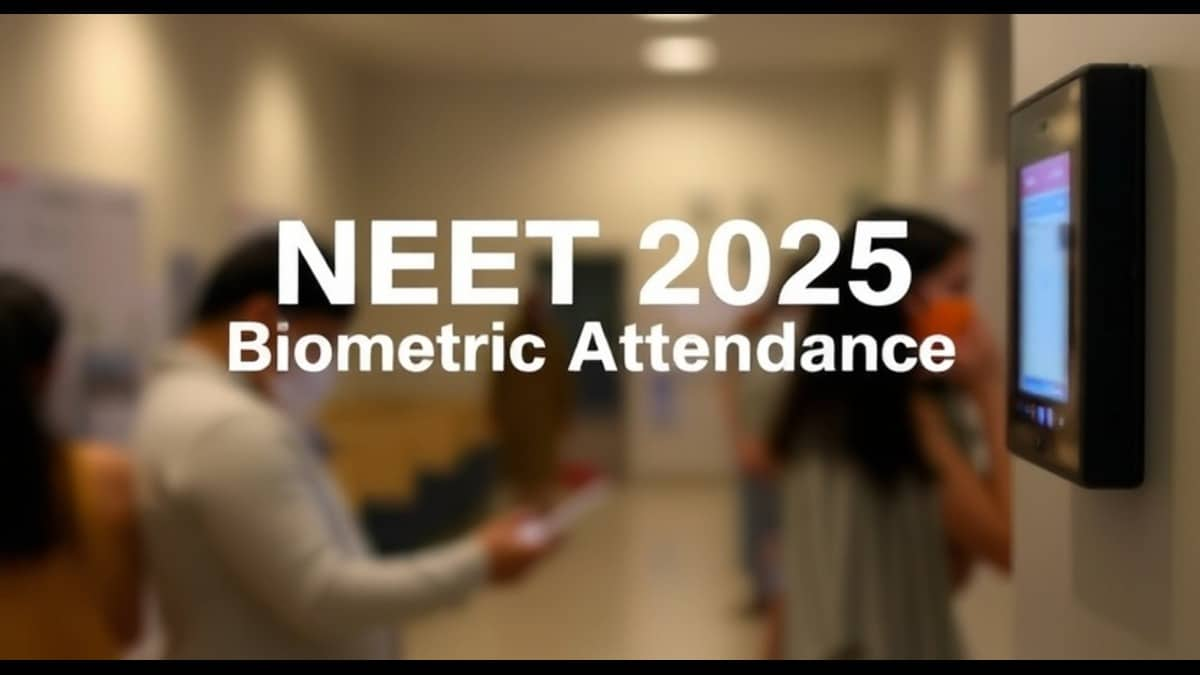
Biometric attendance in the NEET UG exam is the process of recording a candidate’s attendance using unique biological identifiers, such as fingerprints, retina scans, and facial recognition. The NTA has implemented biometric attendance for NEET to ensure that the right candidate appears for the exam and prevent fraudulent practices like impersonation. The NEET exam biometrics by NTA will serve as a digital fingerprint that helps to verify the candidate's identity both at the time of the examination and during the admission process.
Get expert advice on college selection, admission chances, and career path in a personalized counselling session.
The NTA was expected to bring some changes in the NEET 2025 exam. Among these NEET 2025 expected changes is the introduction of a NEET biometric verification. The introduction of the NEET biometric attendance system by the NTA represents a significant step toward ensuring the integrity, security, and fairness of the examination process. The possible rules for NEET 2025 biometrics that can be implemented are as follows -
Get Job Ready in Healthcare | Employability-Focused Programs
Registration and biometric data capture - Before the NEET exam, candidates will be required to register their biometric data where their fingerprints, thumb impressions, and facial recognition will be captured. The recorded biometric data will be then matched with the fingerprints, thumb impression, and face data provided during the filling of the NEET application form 2025. Only if the NEET biometric data matches with the data provided in the application form, only then the candidate be allowed to sit in the NEET exam hall.
Verification at exam centres - On the day of the exam, when candidates arrive at their designated NEET exam centres, they are required to undergo biometric verification again. The system will scan their fingerprint to match it with the data already stored in the system. This ensures that the candidate arriving at the exam centre is indeed the person who registered for the exam.
Post-examination biometric- Once the exam is over, students will have to go through the NEET 2025 biometric attendance again. The biometric data will then be matched with the pre-exam recorded data and only after successful verification, candidates will be able to submit their exam. This NEET biometric attendance system will ensure that the correct candidates appear for the exam and that no violations occur during the test.
The NEET UG 2024 exam was surrounded by several controversies including paper leak, impersonation, and others. The biometric attendance rules in NEET 2025 will ensure that someone else does not appear for the exam on behalf of the candidate. By capturing biometric data, the NTA can ensure that the person sitting for the NEET exam is indeed the registered candidate.
NEET biometric attendance by NTA will offer a more secure method of verifying the identity of candidates compared to traditional paper-based attendance systems. The traditional methods, such as signature verification or manual roll calls can be rigged. Biometric data, on the other hand, is difficult to forge and provides a reliable means of identification.
By using biometric attendance, NTA adds a layer of security to the NEET exam by ensuring that the examination process remains free from fraud and unfair practices. This NEET biometric attendance system will help maintain the credibility and transparency of the examination.
Biometric data is stored digitally, which allows for accurate record-keeping and easy access to the attendance data. In the event of any discrepancies or queries regarding a candidate’s attendance, biometric records can be used to verify the information.

On Question asked by student community
Hello Savi
Please check the link below:
Hope it helps.
Hello, some B.Sc Nursing colleges may offer admission without NEET, but the admission process depends on the college and its eligibility rules. You can find colleges offering B.Sc Nursing admission without NEET here: https://medicine.careers360.com/articles/bsc-nursing-admission-without-neet
Hello, you can pursue BPT in Kerala without NEET UG. Admission is generally based on the LBS Centre rank list and the applicable admission process. You can check BPT colleges in Kerala and their details here: https://medicine.careers360.com/colleges/list-of-bpt-in-physiotherapy-colleges-in-kerala
Hello Student,
If you are looking for information about NEET PG 2025 DNB seat allotment and the fees payable at the allotted college or hospital, DNB seats are allotted through the respective counselling process based on your rank, category, choice of speciality, and seat availability.
For the 2025 session, the
Dear Student, with a NEET PG 2026 rank of 6,600 in the EWS category, your options should be assessed using the relevant counselling year's college-wise closing ranks, category-wise seats and counselling round. Please also confirm whether you are applying through the applicable All India counselling route or another quota. That
the product 'P' will be ,


| Column A | Column B |
| A |
a) Organisation of cellular contents and further cell growth. |
| B |
b) Leads to formation of two daughter cells. |
| C |
c) Cell grows physically and increase volume proteins,organells. |
| D |
d) synthesis and replication of DNA. |
Match the correct option as per the process shown in the
0.16 g of dibasic acid required 25 ml of decinormal solution for complete neutralisation. The modecular weight of the acid will be
32
64
128
256
0xone is

Know possible Govt/Private MBBS/BDS Colleges based on your NEET rank
College Predictors Webinars One to One Counselling Regular Updates Medical Almanac
Get Job Ready in Healthcare | Employability-Focused Programs
Ranked among the top Dental Colleges for 7 consecutive years by India Today poll
Ranked #19 by NIRF, NAAC A++ Accredited | Recognized by dental council of India