SRM Kattankulathur Dental College and Hospital, Kattankulathur
Ranked #19 by NIRF, NAAC A++ Accredited | Recognized by dental council of India


Mistakes the First CBT Batch Will Make in NEET 2027 and How to Avoid Them: Every big change brings a first batch. That first batch always learns some lessons the hard way. NEET 2027 will be no different. NEET UG exam has always been held offline, in pen-and-paper mode, year after year. This format changes for 2027. NEET UG will be conducted in Computer-Based Test (CBT) mode. Students in this first CBT batch will not have any senior who has given NEET in this format. No older cousin, no topper, no video from someone who has actually sat for a NEET CBT exam. Because of this, many students in the first batch may make the same small mistakes, simply because nobody has pointed them out yet.
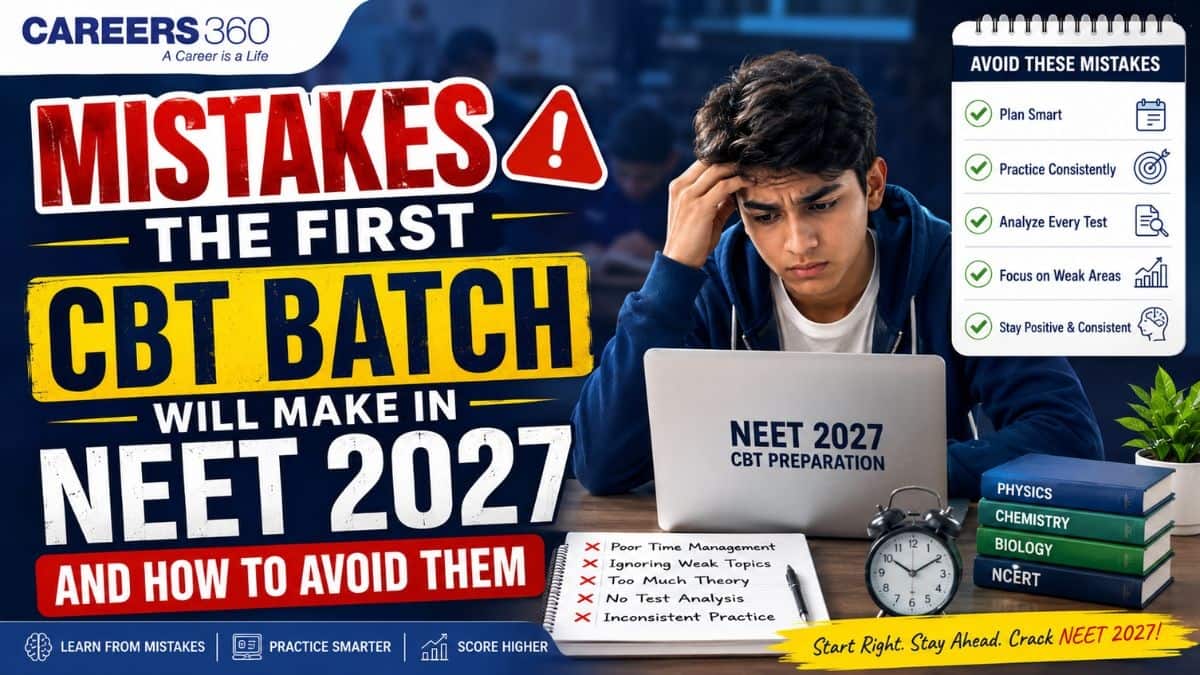
This article points them out. It lists the mistakes NEET 2027 aspirants are most likely to make in CBT mode. It also gives simple fixes for each one. Whether you are a first-time NEET aspirant or a repeater who has only seen an OMR sheet, this article will also help you avoid the common beginner mistakes.
Many students think CBT mode is just "OMR, but on a computer." It is not like that. The pace feels different. The layout feels different. Even reading a long question feels different on a screen.
How to avoid it: Take a few full mock tests just to get used to the feel of a screen-based exam. Comfort with the format matters as much as knowing the syllabus.
Some students use a mouse or keyboard only sometimes, like for schoolwork or casual browsing. On exam day, this can make them slow. Every extra second spent finding the right button adds up over three hours.
How to avoid it: Practise full mock tests using a mouse and keyboard, the same way you will use them on exam day. Do not leave this for the last week.
Many first-time CBT students will forget this button exists. Or they will use it the wrong way. They may flag too many questions, or too few, and lose track by the end of the test.
How to avoid it: Use "mark for review" in every mock test, not only in the real exam. Make it a habit early, not something new you learn under pressure.
A frozen screen. A slow click. A confusing pop-up box. Any of these can upset a student who has never used a digital exam screen before. Panic wastes more time than the actual problem does.
How to avoid it: Know that small technical issues are common in CBT exams. Invigilators usually fix them fast. Staying calm matters more than the glitch itself.
Students who are used to writing in the margins of a paper booklet will look for space near the question on the screen. There is no space there. First-batch students who have not practised this will lose time adjusting mid-exam.
How to avoid it: Practise every mock test using only a separate rough sheet. This is exactly how the real CBT exam will work.
Three hours on a screen tires the eyes and mind in a different way than three hours of writing. This tiredness can build up faster than students expect, especially if they are not used to long screen time.
How to avoid it: Build up screen stamina slowly. Start with short 30-minute mock sessions. Add more time each week.
Many students will keep using the same study material and paper tests they always have. They will think this is enough. It is not enough for the new format. Good preparation now needs online mock tests as part of the routine, not just extra revision.
How to avoid it: Split your test practice between screen-based full-length mock tests and normal revision. Both matter. But only one of them prepares you for the real exam format.
Paper exams have the same fixed instructions every year, so students often skip reading them. The on-screen instructions for CBT may show extra steps, i.e., about navigation, timers, and how to mark for review, and how to submit answers. Skipping these steps can cause confusion during the real exam.
How to avoid it: Read every on-screen instruction carefully during mock tests too, not only on exam day. Treat instructions as part of the test, not just a formality.
On paper, some students judge their speed by how many pages are left. On a screen, this cue is gone. Time now depends only on the digital timer.
How to avoid it: Check the on-screen timer at fixed points, for example, after every 10 questions, during every mock test. Build this habit well before exam day.
As we know, such rumours spread fast, especially about a big change in an exam like this one. Some students may waste their time waiting for a syllabus update or worrying about syllabus changes that are not even happening. As per the latest NEET syllabus, the core NCERT-based syllabus and marking scheme are expected to stay the same.
How to avoid it: Stick to your regular syllabus and NEET exam pattern preparation. Do not let news about the format divert your focus away from real content revision.
Get expert advice on college selection, admission chances, and career path in a personalized counselling session.
Students appearing for NEET 2027 are the test case in many ways. That is not a bad thing. It only means your preparation needs one extra layer that older batches never needed. It is comfort with the CBT format itself. Repeaters should look closely to build this habit and plan this extra adjustment, alongside their normal revision.
Also Read:
Frequently Asked Questions (FAQs)
No. The syllabus, marks, and marking scheme are expected to stay the same. Only the exam format is changing.
Using only paper-based mock tests, and skipping screen-based practice, is likely to be the most common and costly mistake.
Practise often on a computer so the screen feels familiar. Also remember that small technical issues are common, and they usually get fixed fast.
No. Your syllabus and content preparation stay the same. You only need to add regular screen-based testing to your existing routine.

On Question asked by student community
Hello Chetan,
Here are the links you asked for. I hope they serve your purpose.
Hello Suma,
Here are the links you asked for. I hope they serve your purpose.
Hello Bhanuday,
Here are the links you requested. I hope you find them helpful.
Hello Savi
Please check the link below:
Hope it helps.
Hello, for AP NEET PG Category C seats, NRI documents are generally required if you are applying under the NRI quota, and eligibility depends on the applicable counselling rules. The fee payment currency and procedure should be confirmed from the current Dr. NTRUHS notification at its official website drntr.uhsap.in.
the product 'P' will be ,


| Column A | Column B |
| A |
a) Organisation of cellular contents and further cell growth. |
| B |
b) Leads to formation of two daughter cells. |
| C |
c) Cell grows physically and increase volume proteins,organells. |
| D |
d) synthesis and replication of DNA. |
Match the correct option as per the process shown in the
0.16 g of dibasic acid required 25 ml of decinormal solution for complete neutralisation. The modecular weight of the acid will be
32
64
128
256
0xone is

Ranked #19 by NIRF, NAAC A++ Accredited | Recognized by dental council of India
Ranked among the top Dental Colleges for 7 consecutive years by India Today poll