Emversity Allied Health Programs
Get Job Ready in Healthcare | Employability-Focused Programs


Biology is known as the ‘science of exceptions’ due to the numerous exceptions and few universally applicable laws or principles. This leads students to memorise things blindly – definitions, classifications, names of species – rather than breaking down and understanding the concepts. This is why Biology has the reputation of being the toughest and most boring of the Sciences. The inability to correlate Biology with real-life scenarios and the complicated words are the two main reasons for many shunning the subject.

However, Biology is a fascinating, highly visual, and interesting subject as it is the study of life. It concerns everything in the world around us, including the human body. We need to reconsider the way we teach and learn Biology to make it more intellectually stimulating and interesting.
Becoming a successful doctor is what most aspirants writing the National Eligibility cum Entrance Test (NEET) dream of. The NEET UG is the single exam for admission to medicine conducted by the National Testing Agency (NTA). However, to achieve that, aspirants need to be among the top rank-holders so that they get into the best colleges. Biology plays a significant role in this as it carries the maximum marks in NTA NEET. With a better understanding and clarity of the concepts, aspirants can score most out of the total marks and increase the chances of cracking NEET 2022 in one go.
Get expert advice on college selection, admission chances, and career path in a personalized counselling session.
 Master Fundamental Concepts
You can never master a skill or subject without knowing its fundamentals. So, for effective learning, you should first go through the basics and general concepts before moving to the next level to tackle the more specific or difficult ones. This makes it easier and faster to understand the difficult concepts.
Here are a few examples:
Get Job Ready in Healthcare | Employability-Focused Programs
 Visualisation
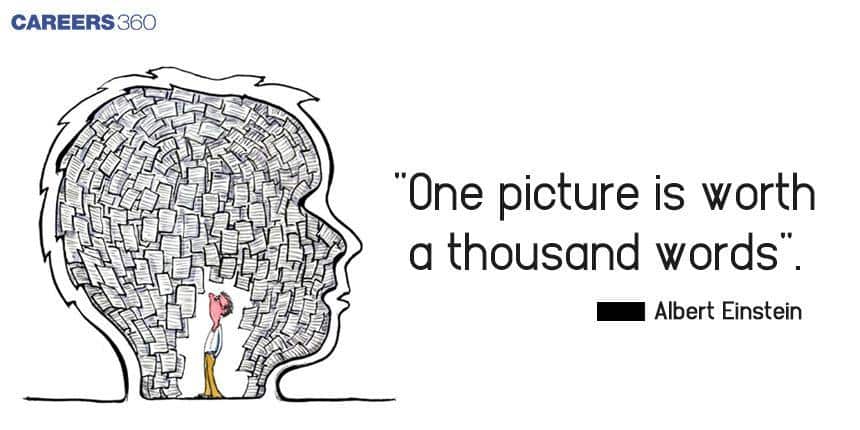
Visualisation refers to the ability to create images in our minds by interpreting information based on what we read, hear or see. The words can be consciously used by our brain to create vivid mental images in order to accelerate our understanding of them. This is the best way to understand, learn, and remember things because it allows you to create a meaningful, memorable and vivid story which you can recall. There are numerous ways to visualise and memorise things. A few examples follow:
For example, if you imagine the sight, touch, and smell of slicing a lemon and then visualise biting into it, your mouth will start watering as your body reacts to the visualisation. Once a student visualises the different parts of the heart through the video, it would become easier and simpler to understand more complex topics such as blood flow, heart-beat rhythm and double circulation. Thus, visualisation makes learning more interesting and eliminates the need for memorising.
 How To Learn Terminology
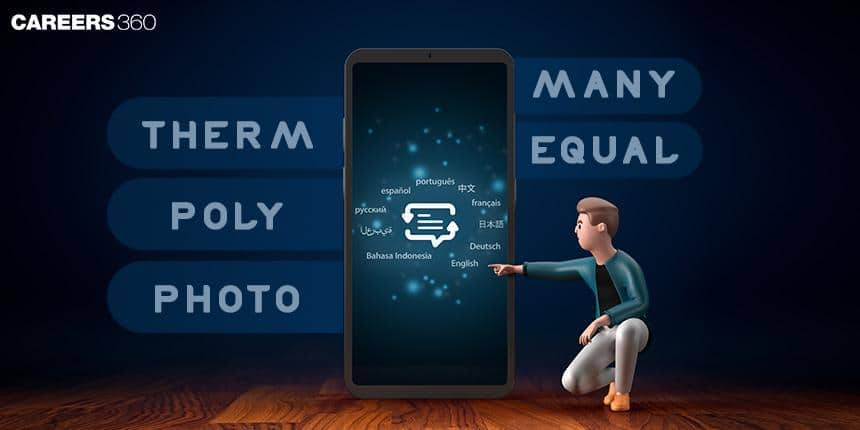
The most common reason why some find Biology dull is having to learn the different scientific terminologies such as names of species and classifications.
Nearly all biological terms come from Latin or Greek words. If you split complex words to identify their roots, you will understand the meaning of the names. And eventually, you will find them easier and more fun to learn. Preparing a flashcard is a tried-and-tested way to learn such words as they are visual cues which help you to connect with the biological terminologies that you're learning.
For example,
So, split the terms and try to understand their root meanings in order to memorise them for the long term. When you encounter such terms, you should prepare flashcards with terms on one side and their meanings on the other.
 Laboratory Experiments
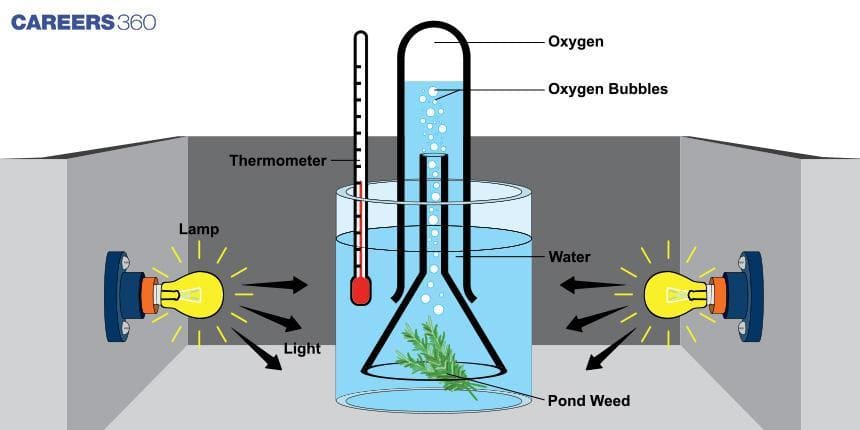
Hands-on laboratory experiments help students to reinforce concepts which have been shown in class and understand a wide variety of complex concepts. Studies have shown that practical learning remains in our minds for longer because we understand the concept better by doing it. So, never miss a chance to visit the lab to do the experiments on what you learnt, apply theoretical knowledge and ask questions!
For example, instead of just reading about photosynthesis and how the sunlight affects it, if students do the experiment and see it in real life, it will create an amazing experience that the brain will retain for longer.
There are various labs available on the internet for students such as The OLabs. These are based on the idea that experiments can be taught virtually using the internet, more efficiently and less expensively. The OLabs have the content aligned with NCERT or CBSE textbooks up to senior-secondary level, including Biology Class 12 and Biology Class 11.
 Learning Pyramid
Sometimes, while studying a topic, you feel you have “got it” only to later realise you did not retain anything you learnt and all gains have been lost. What happened? The answer could be that you registered what you learnt only in your short-term memory. What you see or observe in the short-term doesn’t impact learning. Our brain has two types of memory: short-term and long-term memory. It is possible to improve long-term memory.
Research has shown that within just one hour of learning, 50 per cent of the information is lost if new learnings are not used. This will be up to 70 per cent after 24 hours and 90% or completely lost after a week. It is said “practice makes perfect” because nothing can be more effective than developing the behaviour of practising for learning. Whatever you learn, practice or use. You can do this by teaching others or even yourself.
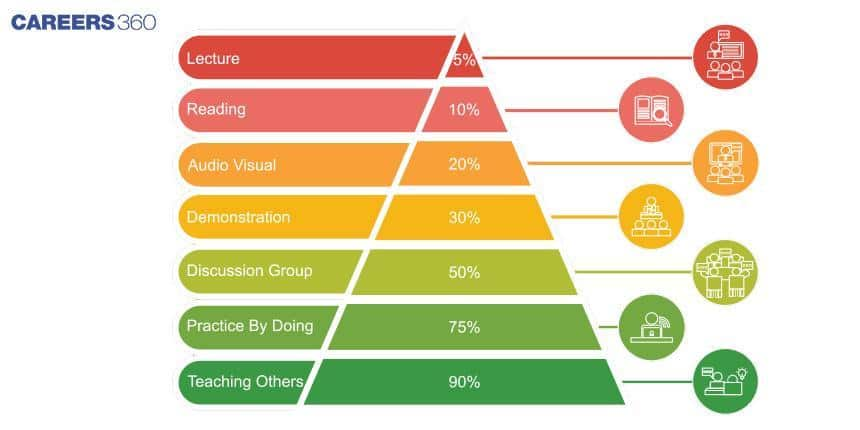
The “cone of learning”, also known as the “learning pyramid” developed by the National Training Laboratory, suggests that students retain only 10 percent of what they read in textbooks while retaining about 90 percent of what they learn through teaching others.
To remember the planets you can use:
My Very Educated Mother Just Served Us Nine Pizzas
Where the first letter of each word stands for Mercury, Venus, Earth, Mars, Jupiter, Saturn, Uranus, Neptune, Pluto (now, minus Pluto).
Rhyming: You can create a rhyme in your own words to remember the items in a list or sequence
To remember the order of Taxa in Biology -
"Dear King Phillip Came Over For Good Soup"
(Domain, Kingdom, Phylum, Class, Order, Family, Genus, Species).
Creating your own mnemonic is a good idea. However, you can also find many of them on different sites.
Chunking: Breaking and grouping items to remember
Don’t limit yourself to the four walls of the classroom and textbook reading. Visit laboratories and try to correlate what you study with real-life. When you eat, think of how and where the food is moving, what the functions of teeth and tongue in digestion are and more. Just try to make each learning session more real, engaging and practical to bring it to long-term memory. These methods can be a real game-changer for you.

On Question asked by student community
Hello Savi
Please check the link below:
Hope it helps.
Hello, for AP NEET PG Category C seats, NRI documents are generally required if you are applying under the NRI quota, and eligibility depends on the applicable counselling rules. The fee payment currency and procedure should be confirmed from the current Dr. NTRUHS notification at its official website drntr.uhsap.in.
Hello, the NEET PG stipend at Parul University depends on the postgraduate course, academic year and applicable university policies.
Hello, some B.Sc Nursing colleges may offer admission without NEET, but the admission process depends on the college and its eligibility rules. You can find colleges offering B.Sc Nursing admission without NEET here: https://medicine.careers360.com/articles/bsc-nursing-admission-without-neet
Hello, you can pursue BPT in Kerala without NEET UG. Admission is generally based on the LBS Centre rank list and the applicable admission process. You can check BPT colleges in Kerala and their details here: https://medicine.careers360.com/colleges/list-of-bpt-in-physiotherapy-colleges-in-kerala
the product 'P' will be ,


| Column A | Column B |
| A |
a) Organisation of cellular contents and further cell growth. |
| B |
b) Leads to formation of two daughter cells. |
| C |
c) Cell grows physically and increase volume proteins,organells. |
| D |
d) synthesis and replication of DNA. |
Match the correct option as per the process shown in the
0.16 g of dibasic acid required 25 ml of decinormal solution for complete neutralisation. The modecular weight of the acid will be
32
64
128
256
0xone is

Know possible Govt/Private MBBS/BDS Colleges based on your NEET rank
College Predictors Webinars One to One Counselling Regular Updates Medical Almanac
Get Job Ready in Healthcare | Employability-Focused Programs
Ranked among the top Dental Colleges for 7 consecutive years by India Today poll
Ranked #19 by NIRF, NAAC A++ Accredited | Recognized by dental council of India