
Search Colleges, Exams, Schools & more


Login
Ciliated Epithelium MCQ - Practice Questions with Answers
Edited By admin | Updated on Sep 18, 2023 18:34 AM | #NEET
Quick Facts
-

12 Questions around this concept.
Solve by difficulty
 EASY
EASYThe epithelial tissue present on the inner surface of bronchioles and fallopian tubes is:
The ciliated columnar epithelial cells in humans are known to occur in:
Concepts Covered - 1
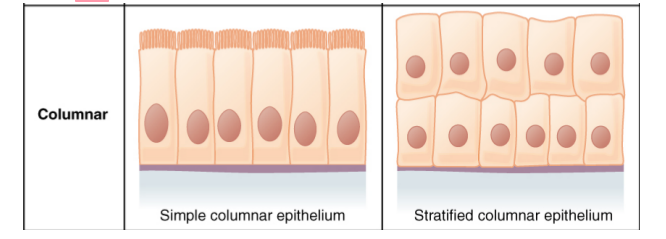
Simple Ciliated Epithelium and Stratified Ciliated Epithelium
Simple Ciliated Epithelium:
Structure
- The cells of ciliated epithelium bear numerous hair-like outgrowths called cilia. These arise from basal granules.
- In ciliated epithelium, mucus containing goblet cells are also found.
- The cilia undergo rhythmic contractions and create a current to transport material.
Ciliated epithelium is of two types :
(a). Ciliated columnar epithelium- This epithelium consists of cilia containing column-like cells.
(b). Ciliated cuboidal epithelium- It consists of cube-like cells having cilia on their free surfaces.
Location:
- Ciliated columnar epithelium lines respiratory tract, fallopian tubes, ventricles of the brain, central canal of the spinal cord, tympanic cavity of the middle ear and auditory tube (Eustachian tube).
- Ciliated cuboidal epithelium occurs in certain parts of nephrons of the kidney.
Functions:
- The major function of the cilia of epithelium is to cause ciliary movements. These movements maintain a flow of mucus or liquid constantly in one direction.
- In oviduct, cilia help to move an egg towards the uterus
- In the respiratory tract, cilia help to push mucus towards the pharynx
- In the nephrons, cilia keep the urine moving
- Cilia of ventricles of the brain and central canal of the spinal cord helps to maintain the circulation of cerebrospinal fluid.
- Stratified ciliated columnar epithelium
- The outer layer consists of ciliated columnar cells while the basal layer possesses columnar cells.
- It covers larynx and upper part of the soft palate.
Study it with Videos
"Stay in the loop. Receive exam news, study resources, and expert advice!"
Get Answer to all your questions

Begin a career in Medical and Allied Sciences. Admissions Open for
Enrol for Aakash Re-NEET 2026 Victory Batch at Rs. 99 only. Batch start 16th May.
KCDSH- Krishnadevaraya Dental College & Sciences Admis 2026
ApplyRanked among the top Dental Colleges for 7 consecutive years by India Today poll
Emversity Allied Health Programs
ApplyGet Job Ready in Healthcare | Employability-Focused Programs
Virohan Allied & Healthcare Programs
ApplyAllied & Healthcare programs | 20+ Partner Universities & Institutes | 98% placement record
Amity University Noida | Allied Health Sciences Admissions
ApplyRanked as India’s #1 Not for profit pvt. University by India Today
SCSVMV Deemed to be University | AHA Admissions 2026
ApplyAlied Health Sciences at SCSVMV | NAAC 'A' Grade | AICTE & UGC Aproved | 100% Placement Support | Merit-based Scholarships