
Search Colleges, Exams, Schools & more


Login

NEET Biology: Microbes In Daily Life Made Easy
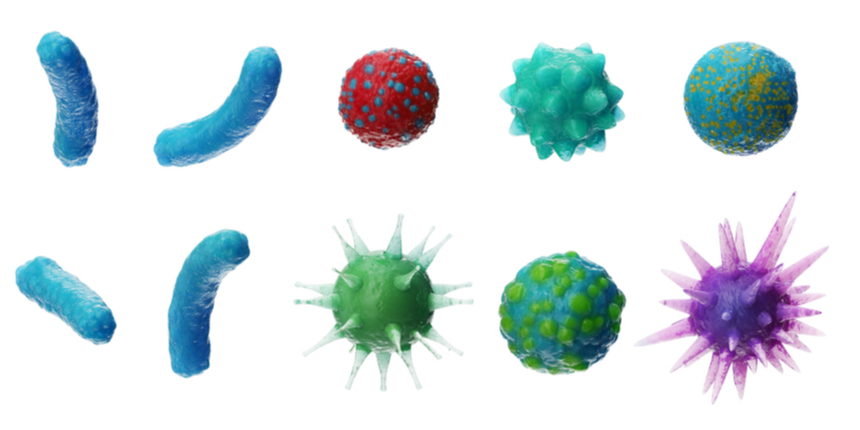
Microbes include bacteria, fungi, protozoa, some algae, viruses, viroids, and also prions. Usually, microbes are considered harmful as they cause various diseases in humans, such as cholera, dysentery, Corona, Hepatitis, HIV, etc. However, not all microbes are harmful; some are beneficial and contribute to human welfare. They help us in our day-to-day activities, without us realizing their roles in our lives. Their usage can be broadly divided into the following categories:
Antibiotics and Vaccination
Chemicals, Enzymes and other Bioactive Molecules
Food and Beverages
Waste Management
Biocontrol
Bio-fertilizers
Antibiotics And Vaccination
Antibiotics are sourced from microbes such as bacteria or fungi and kill or stop the growth of the disease-causing microbes. Penicillin, Streptomycin, Tetracycline and Erythromycin are some of the commonly known antibiotics which are made from fungi and bacteria. Antibiotics have greatly improved our capacity to treat deadly diseases such as plague, whooping cough, diphtheria and leprosy, which used to kill millions all over the globe.
Vaccines are dead or weakened microbes, which are introduced in a healthy body to generate an immune response by producing suitable antibodies. The antibodies remain in the body and protect us from the disease-causing microbes. Several diseases, including cholera, tuberculosis, polio, smallpox and hepatitis can be prevented by vaccination.
Confused About College Admissions?
Get expert advice on college selection, admission chances, and career path in a personalized counselling session.
Book a Counselling Slot
Select Date
Pick a Slot
Chemicals, Enzymes And Other Bioactive Molecules
Microbes are also used for commercial and industrial production of certain chemicals like organic acids, alcohols and enzymes which are used in a variety of industrial processes. For e.g. Bacterium Acetobacter aceti and Lactobacillus helps in production of acetic acid and lactic acid respectively. Yeast (Saccharomyces cerevisiae) is used for the commercial production of ethanol. Lipases are used in detergent formulations and are helpful in removing oily stains from the laundry. Streptokinase produced by the bacterium Streptococcus is used as a ‘clot buster’ for removing blood clots. Another bioactive molecule, cyclosporin A, produced by the fungus Trichoderma polysporum, is used as an immunosuppressive agent. Statins produced by the yeast Monascus purpureus have been commercialized as blood-cholesterol lowering agents.
Food And Beverages
A number of traditional drinks and foods are also made by fermentation by microbes. Micro-organisms such as Lactobacillus and others commonly called lactic acid bacteria (LAB) grow in milk and convert it to curd. Sugar is converted into alcohol by yeast, by the process of fermentation. The dough used for making foods such as dosa and idli is fermented by bacteria. The dough used for making bread is fermented using baker’s yeast. It is used for fermenting malted cereals and fruit juices to produce ethanol as well. Microbes are also used to ferment
fish, soybean, and bamboo shoots to make food. Bacteria and fungi are used to impart particular texture, taste, and flavor to the cheese. The large holes in ‘Swiss cheese’ are due to the production of a large amount of CO2 by a bacterium named Propionibacterium shermanii.
Waste Management
Microbes are used to treat sewage (wastewater) by the process of activated sludge formation and this helps in the recycling of water. In sewage treatment plants, useful aerobic microbes grow on this organic matter and consume it, significantly reducing the BOD (biochemical oxygen demand) of the effluent, thereby reducing the pollution potential of wastewater. Further, some bacteria can grow anaerobically on the sewage, to produce a mixture of gases such as methane, hydrogen sulfide, and carbon dioxide. These gases form biogas and can be used as a source of energy.
NEET Syllabus: Subjects & Chapters
Select your preferred subject to view the chapters
Biocontrol
Biocontrol refers to the use of biological methods for controlling plant diseases and pests and is considered a better alternative to weedicides and pesticides. Bacteria Bacillus thuringiensis can be introduced into fields in order to control butterfly caterpillars. Fungus Trichoderma are free-living fungi that are very common in the root ecosystems and are effective biocontrol agents against several plant pathogens. Baculoviruses are pathogens that attack insects and other arthropods and have shown to have no negative impacts on plants, mammals, birds, fish or even on non-target insects.
Biofertilizers
Biofertilizers are organisms such as bacteria, fungi, and cyanobacteria, that enrich the nutrient quality of the soil. The root nodes of leguminous plants contain Rhizobium bacteria, which can fix atmospheric nitrogen into organic forms, which are used by the plant as a nutrient. Fungi can absorb phosphorus from soil and pass it to the plant. Cyanobacteria are autotrophic microbes widely found in aquatic and terrestrial environments, many of which can fix atmospheric nitrogen. In paddy fields, cyanobacteria serve as an important biofertilizer. Blue-green algae also add organic matter to the soil and increase its fertility.
Articles
Related Stories
|
Upcoming Medicine Exams

Certifications By Top Providers
Explore Top Universities Across Globe
Popular Courses and Specializations
List of colleges accepting NEET
Browse Medicine Colleges by State
Questions related to NEET
On Question asked by student community
Have a question related to NEET ?
Hello Chetan,
Here are the links you asked for. I hope they serve your purpose.
Hello Suma,
Here are the links you asked for. I hope they serve your purpose.
Hello Bhanuday,
Here are the links you requested. I hope you find them helpful.
Hello Savi
Please check the link below:
- https://medicine.careers360.com/articles/neet-previous-year-question-paper-with-solution
- https://www.careers360.com/download/neet-sample-papers-previous-years
Hope it helps.
Hello, for AP NEET PG Category C seats, NRI documents are generally required if you are applying under the NRI quota, and eligibility depends on the applicable counselling rules. The fee payment currency and procedure should be confirmed from the current Dr. NTRUHS notification at its official website drntr.uhsap.in.
Popular NEET Questions
the product 'P' will be ,
Option: 1

Option: 2

Option: 3
Option: 4


| Column A | Column B |
| A |
a) Organisation of cellular contents and further cell growth. |
| B |
b) Leads to formation of two daughter cells. |
| C |
c) Cell grows physically and increase volume proteins,organells. |
| D |
d) synthesis and replication of DNA. |
Match the correct option as per the process shown in the
0.16 g of dibasic acid required 25 ml of decinormal solution for complete neutralisation. The modecular weight of the acid will be
Option: 1
32
Option: 2
64
Option: 3
128
Option: 4
256
0xone is
Option: 1
Option: 2
Option: 3
Option: 4

Applications for Admissions are open.
Ranked #19 by NIRF, NAAC A++ Accredited | Recognized by dental council of India
Krishnadevaraya College of Dental Sciences and Hospital, Bangalore
ApplyRanked among the top Dental Colleges for 7 consecutive years by India Today poll
NEET Notifications
Never miss NEET update
Get timely NEET updates directly to your inbox. Stay informed!